
Yes. A driver can be charged with DWI in New Hampshire even when a breath or blood test shows a blood alcohol concentration below .08 percent. The .08 threshold is not a guarantee that a driver is legally safe from a DWI charge. New Hampshire law separately prohibits driving while under the influence of intoxicating liquor, drugs, or other substances that impair the ability to drive.
For someone arrested after receiving a result such as .05, .06, or .07, this distinction can be critical. A prosecutor may attempt to establish impairment through driving behavior, field sobriety testing, observations by the arresting officer, statements, chemical testing, and other evidence. A below-.08 result can also create significant issues for the defense to examine.








What Does the .08 BAC Limit Actually Mean in New Hampshire?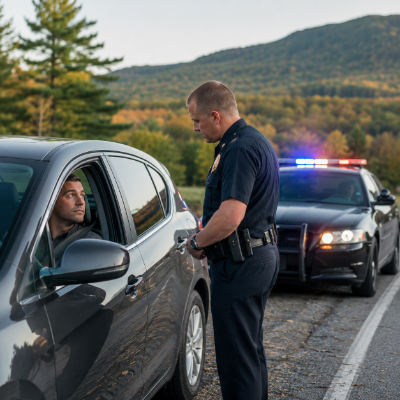
New Hampshire RSA 265-A:2 establishes separate ways a person can violate the state’s DWI law.
Under RSA 265-A:2, I(b), a driver age 21 or older violates the excess alcohol concentration provision by driving or attempting to drive with an alcohol concentration of .08 or higher. For a driver under 21, the statutory threshold is .02.
Yet RSA 265-A:2, I(a) separately prohibits driving or attempting to drive while under the influence of intoxicating liquor or certain drugs and substances that impair a person’s ability to drive.
That distinction answers one of the most common questions following a New Hampshire DWI arrest:
A BAC below .08 does not automatically prevent a DWI charge or conviction based on impairment.
The prosecution would instead need to rely on the evidence available to establish that the driver was under the influence.
What Happens if Your BAC Is Between .03 and .08?
New Hampshire law gives particular significance to different alcohol concentration ranges.
Under RSA 265-A:11, an alcohol concentration above .03 but below .08 is relevant evidence. It does not receive prima facie effect as proof that the driver was or was not under the influence. Instead, the BAC result may be considered along with other competent evidence when determining guilt or innocence.
The statute also provides that an alcohol concentration of .03 or less is prima facie evidence that the defendant was not under the influence of intoxicating liquor.
This makes the evidence surrounding the traffic stop particularly significant in a below-.08 case.
For example, imagine that a driver receives a chemical test result of .06. The prosecutor cannot simply treat that number the same way the law treats a BAC of .08 or greater. The state may instead point to other circumstances surrounding the arrest to argue that alcohol impaired the driver’s ability to operate the vehicle.
What Evidence Can Police Use in a Below-.08 DWI Case?
A DWI investigation rarely depends on one piece of evidence.
When an officer suspects impairment, the investigation can include observations made before and after the traffic stop. New Hampshire law permits evidence concerning physical testing and alcohol concentration in prosecutions under RSA 265-A:2.
Evidence in a below-.08 case may include:
- The reason the vehicle was stopped
- Alleged weaving, speeding, delayed braking, or other driving behavior
- The driver’s appearance and behavior
- Odor of alcohol
- Statements about drinking
- Field sobriety test performance
- Breath or blood test results
- Police cruiser or body-camera footage
- Witness observations
- Medical or physical conditions affecting the driver’s behavior
None of these facts should automatically be treated as proof of guilt. The circumstances surrounding each piece of evidence matter.
A driver may have been tired, nervous, distracted, injured, or affected by a medical condition. Road conditions can also affect driving. Field sobriety exercises may be influenced by footwear, balance problems, uneven surfaces, weather, age, or physical limitations.
A New Hampshire DWI lawyer can examine whether the prosecution’s interpretation of those facts is supported by the evidence.

James J. Tenn, Jr.
Attorney

Mary Elizabeth Tenn
Attorney

John J. Tenn
Attorney
Can You Be Arrested Before Police Know Your BAC?
Yes. A DWI arrest can occur before the final chemical test result is available.
An officer may develop suspicion based on driving behavior and observations during the roadside investigation. The later chemical test result then becomes another piece of evidence.
That creates a situation that can surprise drivers. Someone may be arrested on suspicion of DWI and later learn that the chemical test was below .08.
A below-limit result does not automatically erase the arrest because New Hampshire recognizes an impairment-based DWI offense separately from the .08 excess-alcohol-concentration offense.
It may, though, change how the case is evaluated and defended.
Does a BAC Below .08 Prevent an Administrative License Suspension?
This issue requires distinguishing the criminal DWI prosecution from New Hampshire’s administrative license suspension process.
Current New Hampshire administrative rules provide for an administrative license suspension when a person refuses qualifying testing or when testing reveals an alcohol concentration of at least .08 for a driver 21 or older, or at least .02 for a driver under 21.
That means a below-.08 result for an adult driver can raise different administrative issues from the criminal allegation of impairment.
The circumstances are different for drivers under 21 and commercial drivers. New Hampshire commercial licensing rules address BAC results beginning at .04 in certain situations.
Anyone facing a DWI arrest should have both the criminal case and potential licensing consequences reviewed because the procedures and issues are not necessarily identical.
How Can a Below-.08 DWI Charge Be Defended?
A chemical test result below .08 can be significant, but an effective defense usually requires examining the entire investigation rather than focusing exclusively on the number.
Potential areas of investigation can include:
The reason for the traffic stop. The defense can examine the circumstances that led police to stop the vehicle and the evidence supporting the officer’s account.
Officer observations. Statements about appearance, speech, coordination, or behavior should be compared with available recordings and other evidence.
Field sobriety testing. The conditions under which roadside exercises were administered can matter. Lighting, traffic, road surface, instructions, physical limitations, and footwear may all deserve examination.
Chemical testing. Breath and blood testing can raise questions concerning procedures, administration, records, timing, and the circumstances surrounding collection and analysis.
Video evidence. Cruiser and body-camera recordings may provide a more complete picture of the encounter than a written report alone.
Consider a driver who is stopped late at night and tests at .06. The officer reports poor balance and difficulty following instructions. Video later shows that the roadside surface was uneven and that the driver repeatedly asked for clarification about the instructions.
Those details may become relevant when evaluating whether the evidence actually establishes impairment beyond a reasonable doubt.
See What Our Clients Are Saying About Us

Attorney John Tenn and his entire team are amazing people! If you need a lawyer, he is the man to call! He handled my case in a professional matter and took the stress out of it all.
Mallory C.

The whole team were very professional and responsive. My case was effectively handled with good communication during the process. Very satisfied with the outcome. Highly recommend!
A. McMillan
What Are the Consequences of a New Hampshire DWI Conviction?
Even a first DWI conviction can carry serious consequences.
Under the current version of RSA 265-A:18, a conviction under RSA 265-A:2, I is a Class B misdemeanor. The statute provides for a minimum $500 fine, impaired-driver requirements, and driver’s license revocation. For a first offense, the license revocation is generally at least nine months, although the statute permits a court to suspend part of that period when specified requirements are satisfied.
Repeat offenses and aggravated DWI allegations can lead to substantially greater penalties, including longer revocation periods and mandatory incarceration in qualifying cases.
This is why a result below .08 should not cause someone to ignore a pending charge. The case still deserves careful legal review.
What Should You Do After a Below-.08 DWI Arrest?
Do not assume that the BAC result alone determines what will happen.
Preserve paperwork from the arrest and chemical testing, write down what you remember about the stop while the details remain fresh, and avoid discussing the facts of the case publicly or on social media.
Then speak with a lawyer who handles New Hampshire DWI defense.
The central question in a below-.08 case may not simply be, “What was the BAC?” It may be whether the state can prove, using all admissible evidence, that the driver was under the influence within the meaning of New Hampshire law.
Speak With a New Hampshire DWI Attorney Today
If you were arrested for DWI despite having a BAC below .08, Tenn And Tenn, PA can review the traffic stop, testing procedures, police observations, video evidence, and other circumstances surrounding your arrest. Our attorneys represent people facing DWI allegations throughout New Hampshire and can explain the criminal and licensing issues that may apply to your case.
Contact Tenn And Tenn, PA today for a confidential consultation with a New Hampshire DWI attorney and learn about your legal options.
Millions in Verdicts & Settlements
The attorneys at Tenn And Tenn are ready to help you solve your legal problems and obtain results.
$9,000,000
Pedestrian Accident
$2,225,000
Motorcycle Collision
$2,224,000
CarAccident


 |

 |