
Earlier sunsets can make late-afternoon and evening driving more difficult across New Hampshire. Reduced visibility, glare, wet roads, fallen leaves, traffic, wildlife, and driver fatigue can all affect how a collision happens. Darkness alone does not determine fault. Drivers are still expected to use reasonable care based on the conditions around them.
If you are injured in an evening crash, evidence such as photographs, video, witness statements, vehicle damage, roadway conditions, weather information, and medical records can help show what happened and who may be responsible.






Why Earlier Sunsets Can Increase Evening Driving Risks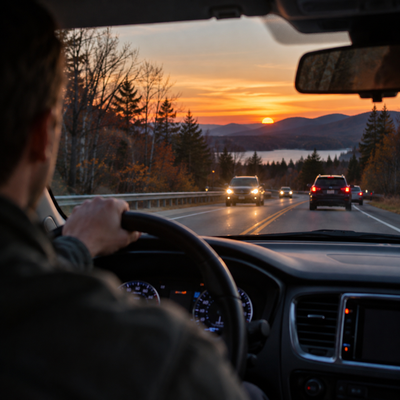
As fall progresses in New Hampshire, daylight fades earlier each day. A commute, school pickup, grocery trip, or drive home that took place in daylight only weeks earlier may suddenly happen during twilight or after dark.
Dusk can create difficult visual conditions because the sky may remain bright while the roadway becomes much darker. Shadows can deepen near trees, buildings, curves, intersections, and rural stretches of road. Pedestrians, cyclists, stopped vehicles, wildlife, lane markings, and debris may become harder to identify.
Low-angle sunlight can also create glare before sunset. After daylight fades, approaching headlights may make it harder to see the roadway clearly. Drivers may move quickly between well-lit commercial areas and roads with little artificial lighting.
These conditions do not automatically make driving unsafe. They can require drivers to adjust their speed, following distance, and attention to match what they can safely see.
Common Causes of Evening Car Accidents in New Hampshire
Evening car accidents in New Hampshire can involve more than one condition at the same time. Roads throughout the state include highways, city streets, rural routes, wooded corridors, hills, curves, and intersections where visibility can change quickly.
Common evening driving hazards can include:
- Pedestrians entering or crossing the roadway
- Cyclists traveling in low-light conditions
- Drivers following too closely
- Vehicles stopping or turning unexpectedly
- Deer and other wildlife entering traffic
- Wet pavement or fallen leaves reducing traction
- Rain, mist, or fog limiting visibility
- Headlight glare from approaching vehicles
- Distracted driving
- Driver fatigue after work or a long day
- Speed that is too fast for available visibility
A driver may be traveling below the posted speed limit and still be driving too fast for the conditions. After a collision, the legal question often focuses on whether each driver acted reasonably based on the road, weather, visibility, traffic, and other conditions present at that time.

James J. Tenn, Jr.
Attorney

Mary Elizabeth Tenn
Attorney

John J. Tenn
Attorney
How Reduced Visibility Can Affect Fault After a New Hampshire Car Accident
Reduced visibility can affect fault after a New Hampshire car accident, but poor visibility does not automatically excuse a driver from responsibility.
An investigation may examine:
- Whether the driver was paying attention
- Whether the headlights were on and functioning
- Whether the windshield was clear
- Whether the driver was traveling at a reasonable speed
- Whether the driver maintained enough following distance
- Whether there was enough time and distance to react
- Whether another driver made an unsafe maneuver
- Whether a pedestrian or cyclist entered the roadway unexpectedly
- Whether weather or road conditions affected stopping distance
Drivers who have questions about liability after a collision can learn more here:
https://www.tennandtenn.com/new-hampshire-car-accident-lawyers/
New Hampshire follows a modified comparative fault rule. More than one person may share responsibility for the same collision. An injured person’s compensation can be reduced according to that person’s percentage of fault. A person who is more than 50 percent responsible generally cannot recover damages from another party.
This rule can become especially relevant in dusk and nighttime crashes because several factors may contribute to the same accident.
Millions in Verdicts & Settlements
The attorneys at Tenn And Tenn are ready to help you solve your legal problems and obtain results.
$9,000,000
Pedestrian Accident
$2,225,000
Motorcycle Collision
$2,224,000
CarAccident
Evidence Can Be Critical After a Dusk or Nighttime Collision
Evidence can be especially important after a dusk or nighttime collision because lighting conditions can change quickly. A photograph taken thirty minutes after a crash may show a much darker scene than the one that existed when the collision happened.
Early documentation can help preserve details about visibility, traffic, road conditions, and the surrounding area.
Useful evidence may include:
- Photographs or video of the accident scene
- Dashcam footage
- Security or traffic camera recordings
- Police reports
- Witness statements
- Vehicle damage
- Headlight and vehicle lighting information
- Phone records when distraction is suspected
- Roadway and weather conditions
- Medical records
- Employment records showing lost income
- Notes describing the time, direction of travel, and visibility
If a crash happened near a business, parking lot, residence, or intersection, surveillance footage may exist. Some camera systems overwrite recordings quickly, so early preservation can matter.
Lighting changes fast after sunset. Evidence collected close to the time of the crash can help show what the driver could reasonably see.
Distracted driving may also affect liability in an evening collision. More information is available here:
https://www.tennandtenn.com/prove-distracted-driver-new-hampshire-car-accident/
What Happens When Wet Leaves or Rain Are Also Involved?
Wet leaves, rain, fading daylight, fog, traffic, and glare can combine during fall driving in New Hampshire. These conditions can reduce traction, limit visibility, and increase stopping distance.
Weather does not automatically excuse a collision. Drivers are expected to account for conditions they can reasonably observe.
For example, a speed that may be reasonable on a dry afternoon may not be reasonable on a dark road covered with wet leaves. A driver may also need more following distance when rain or roadway debris makes braking less predictable.
More information about wet leaves and liability is available here:
https://www.tennandtenn.com/wet-leaves-car-accidents-new-hampshire-liability/
When several conditions contribute to a crash, an insurance company may focus on one factor and give less attention to another. A careful investigation should examine the full sequence of events.
What to Do After an Evening Car Accident in New Hampshire
The steps you take after an evening car accident in New Hampshire can protect your health and help preserve evidence.
If you can do so safely, move away from active traffic and Request emergency assistance when emergency help is needed. Follow instructions from law enforcement and emergency personnel.
Seek medical care for injuries or symptoms. Some injuries may not become fully apparent immediately after a collision.
If you are physically able to document the scene safely, consider taking photographs or video showing:
- Vehicle positions
- Vehicle damage
- Road markings
- Intersections
- Lighting conditions
- Debris
- Skid marks
- Nearby signs
- Weather conditions
- Surrounding businesses or buildings
Write down the approximate time of the collision and anything you remember about visibility, glare, traffic, or road conditions.
Avoid guessing about who was at fault. People involved in a crash may not know every fact about what happened in the seconds before impact.
For more information about what to do after a New Hampshire auto accident, visit:
https://www.tennandtenn.com/what-to-do-if-youre-in-a-new-hampshire-auto-accident/
When an Insurance Company Disputes an Evening Accident Claim
An insurance company may argue that a collision could not have been avoided because of darkness, glare, poor weather, wildlife, or another sudden hazard. It may also argue that the injured person contributed to the accident.
Those arguments should be compared with the available evidence.
If reduced visibility played a role, questions may include whether a reasonably careful driver should have slowed down, increased following distance, used headlights appropriately, or paid closer attention.
Insurance disputes can also involve:
- Medical treatment
- Lost wages
- Property damage
- The cause of the injuries
- The severity of the injuries
- Comparative fault
- Available insurance coverage
Keeping records of medical care, accident-related expenses, missed work, and communications with insurers can help document the claim.
How a New Hampshire Car Accident Lawyer Can Help
A New Hampshire car accident lawyer can investigate the collision, gather evidence, review insurance coverage, communicate with insurers, assess comparative fault arguments, and document accident-related losses.
In an evening crash, that investigation may include reviewing the lighting, roadway, visibility, weather, traffic, and vehicle conditions that existed at the time of the collision.
Legal representation can be useful when injuries are serious, multiple vehicles are involved, liability is disputed, or an insurer asks for a recorded statement before the injured person understands the legal issues involved.
People with questions about filing deadlines can review:
Speak With a New Hampshire Car Accident Attorney
Earlier sunsets are a normal part of fall in New Hampshire, but they can change driving conditions quickly. When darkness, glare, traffic, weather, wet leaves, or limited visibility contributes to a crash, determining fault may require a careful review of the evidence.
If you or a loved one was injured in an evening collision, Tenn And Tenn, PA can review the circumstances, explain how New Hampshire law may apply, and discuss your legal options. The firm represents people injured in New Hampshire car accidents and handles personal injury matters throughout New Hampshire and nearby areas.
You can also contact the firm here:
https://www.tennandtenn.com/contact-us/
This article is for informational purposes only and is not legal advice. Consult an attorney about your specific situation.


 |

 |