
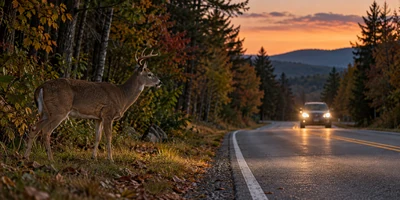
A deer collision can leave you dealing with vehicle damage, injuries, medical bills, towing costs, and questions about which insurance coverage applies. The answer often depends on how the crash happened.
If your vehicle directly strikes a deer, comprehensive auto coverage may apply to vehicle damage, subject to your policy terms and deductible. If you swerve to avoid a deer and hit a tree, guardrail, another vehicle, or another object, collision coverage may apply instead. If another driver contributes to the crash, a personal injury claim may also involve negligence and New Hampshire comparative fault law.
Tenn And Tenn, PA represents people injured in car accidents in Manchester and throughout New Hampshire. If you have questions about a deer-related crash, you can review the firm’s New Hampshire car accident information here:
https://www.tennandtenn.com/new-hampshire-car-accident-lawyers/



Why the Details of a Deer Collision Matter
Deer can cross highways and other roads in New Hampshire, sometimes with little time for a driver to react. A single deer-related event can lead to very different crash scenarios.
You may:
Strike the deer directly
Brake and get rear-ended by another driver
Swerve and hit a guardrail, tree, sign, or other object
Swerve into another lane and collide with another vehicle
Encounter a driver who crosses the center line while trying to avoid the deer
Suffer injuries as a driver or passenger even when no other vehicle is involved
The way the collision occurred can affect both the insurance claim and any question of legal responsibility.
The type of impact matters. A direct animal strike and a crash caused by swerving can trigger different physical-damage coverages.

James J. Tenn, Jr.
Attorney

Mary Elizabeth Tenn
Attorney

John J. Tenn
Attorney
What Insurance May Cover a Direct Deer Strike?
If your vehicle directly strikes a deer, comprehensive auto coverage may pay for covered vehicle damage, subject to the policy language, deductible, limits, exclusions, and other applicable terms.
Comprehensive auto coverage generally applies to certain types of vehicle damage that do not result from a standard collision with another vehicle or fixed object. Animal strikes commonly fall within that category.
You should not assume that comprehensive auto coverage was included in your policy. Check the declarations page and policy documents that were in effect on the date of the crash.
If the vehicle is financed or leased, the lender or leasing company may have required physical-damage coverage. If you own the vehicle outright, the coverage depends on the policy you selected.
The coverage that pays for damage to your vehicle is separate from coverage that may apply to bodily injuries.
What Happens If You Swerve to Avoid a Deer?
Insurance treatment may be different if you avoid the deer but hit something else.
For example, suppose you are driving on a two-lane road when a deer enters your lane. You turn sharply to avoid the animal and strike a roadside guardrail. Because your vehicle did not hit the deer, the damage may be handled under collision coverage rather than comprehensive auto coverage, depending on the policy.
A similar issue can arise if you swerve and hit:
A tree
A utility pole
A guardrail
A parked vehicle
Another moving vehicle
A building or other fixed object
The exact coverage decision is made under the terms of the applicable policy and the facts of the crash.
Can Another Driver Be at Fault for a Deer-Related Crash?
Yes. The presence of a deer does not automatically eliminate the possibility that another driver contributed to the collision.
For example, a deer may enter the roadway and cause the first driver to brake. A second driver who is following too closely may then rear-end the first vehicle. In another situation, an oncoming driver may cross the center line while attempting to avoid the deer and strike another vehicle.
Conduct that may be relevant to fault can include:
Following another vehicle too closely
Crossing the center line
Making an unsafe lane change
Driving too fast for the road or visibility conditions
Failing to maintain reasonable control
Rear-ending a vehicle that slows or stops for wildlife
Failing to keep a reasonable lookout
The investigation should focus on the full sequence of events rather than only the fact that a deer entered the roadway.
Evidence may help answer questions about vehicle speed, following distance, lane position, braking, lighting, road conditions, visibility, and the time each driver had to react.
Millions in Verdicts & Settlements
The attorneys at Tenn And Tenn are ready to help you solve your legal problems and obtain results.
$9,000,000
Pedestrian Accident
$2,225,000
Motorcycle Collision
$2,224,000
CarAccident
How Does New Hampshire Comparative Fault Apply?
New Hampshire follows a modified comparative fault rule under RSA 507:7-d.
A person’s own fault does not automatically bar recovery if that person’s fault was not greater than the fault of the defendant or defendants in the aggregate. Any damages awarded are reduced in proportion to the percentage of fault assigned to the injured person.
For example, if an injured person is found 20 percent at fault, an otherwise recoverable damages award can be reduced by 20 percent.
The statute is available here:
https://gc.nh.gov/rsa/html/LII/507/507-mrg.htm
Comparative fault can matter in a deer-related collision when an insurance company argues that more than one driver contributed to the crash.
For more information about New Hampshire injury claims, visit:
https://www.tennandtenn.com/new-hampshire-personal-injury-resources/
What If No Other Driver Was at Fault?
Not every deer collision creates a negligence claim against another person.
If you directly strike a wild deer and no other driver or legally responsible party contributed to the crash, there may be no third-party personal injury claim based on negligence.
Insurance may still provide benefits, depending on the policy.
Possible sources of coverage can include:
Comprehensive auto coverage for a direct animal strike that damages the vehicle
Collision coverage for certain crashes involving another vehicle or object
Medical payments coverage, if included in the policy, for covered medical expenses
Health insurance for covered medical treatment
Other applicable insurance based on the facts and policy terms
Vehicle damage and bodily injury should be evaluated separately because different coverages may apply to each type of loss.
Passengers may also have insurance and legal options that differ from those available to the driver.
If you were injured while riding in another person’s vehicle, review:
https://www.tennandtenn.com/new-hampshire-passenger-injury-lawyers/
What Evidence Should You Preserve After a Deer Collision?
Evidence can disappear quickly after a deer crash. Vehicles may be moved, debris may be cleared, tire marks may fade, and the animal may leave the area.
If you can do so safely, preserve information that may help explain what happened.
Useful evidence can include:
Photographs of every side of each damaged vehicle
Close-up photographs of the point of impact
Photographs of the road, shoulder, lane markings, guardrails, trees, signs, and surrounding area
Dash camera footage
Nearby surveillance or doorbell camera footage, when available
Witness names and contact information
Police reports or incident numbers
Towing and storage records
Repair estimates and invoices
Vehicle valuation records if the vehicle is declared a total loss
Medical records and bills
Records showing missed work or lost income
Insurance letters, emails, claim notes, and settlement documents
Do not enter an active roadway or put yourself in danger to take photographs. Medical care and personal safety come first.
Do You Have to Report a Deer Collision in New Hampshire?
New Hampshire law requires drivers involved in certain motor vehicle accidents to stop and provide required information. RSA 264:25 also requires a written report to the Division of Motor Vehicles within 15 days when a person is injured or killed or when property damage exceeds $1,000, unless the accident was investigated by a police officer and the officer files the required report.
The current statute is available here:
https://gc.nh.gov/rsa/html/XXI/264/264-25.htm
Even when you are uncertain whether a reporting requirement applies, promptly notifying your insurer can also help protect your ability to pursue available policy benefits. Review the notice requirements in your policy.
What Should You Tell the Insurance Company?
Give accurate information about what you know.
Do not guess about details that you did not see or cannot remember.
For example, you may know that:
A deer entered from the right side of the road
You applied the brakes
You remained in your lane
Another vehicle struck you from behind
You may not know the other driver’s exact speed, exact following distance, or exact reaction time.
If you do not know a fact, say that you do not know rather than estimating.
You should also read settlement documents and releases carefully before signing them. A document may resolve a property-damage claim, an injury claim, or multiple claims. Make sure you understand what rights the document affects.
When Should You Seek Medical Care After a Deer Accident?
A deer collision can cause injuries even when the vehicle does not strike another car.
Some symptoms appear immediately. Others may become more noticeable over the following hours or days.
Possible accident-related injuries can include:
Neck injuries
Back injuries
Shoulder injuries
Broken bones
Head injuries
Soft tissue injuries
Cuts and bruising
Seek medical evaluation when you have pain, dizziness, weakness, numbness, headaches, reduced movement, or other concerning symptoms after the crash.
Medical records can document when symptoms were reported, what conditions were evaluated, and what treatment was recommended.
Follow the treatment plan provided by your medical professionals and keep copies of records related to the collision.
How Can a New Hampshire Car Accident Lawyer Help?
A deer collision does not automatically require legal representation. Legal guidance may be useful when injuries are serious, several vehicles are involved, fault is disputed, insurance coverage is contested, or a settlement release may affect multiple claims.
A New Hampshire car accident lawyer can review issues such as:
How the collision occurred
Whether another driver contributed to the crash
Available insurance policies
Comprehensive and collision coverage disputes
Medical payments coverage
Photographs, video, witness accounts, and police records
Medical expenses and treatment
Lost income
Future treatment needs
Total-loss valuation disputes
Comparative fault allegations
Settlement releases
A lawyer can also communicate with insurers and evaluate whether the available evidence supports a claim against another driver or another legally responsible party.
What Steps Can You Take After a New Hampshire Deer Collision?
After a deer collision, focus on safety, medical needs, documentation, and timely reporting.
Consider these steps:
Move out of active traffic when you can do so safely
Call for emergency help when anyone is injured
Notify law enforcement when the circumstances require it
Obtain medical care when needed
Photograph the vehicles and scene when it is safe
Save video footage before it is overwritten
Collect witness contact information
Keep towing, storage, repair, and rental records
Save medical bills and treatment records
Notify your insurer as required by the policy
Keep copies of all insurance correspondence
Write down what you remember while the details are fresh
Review any release carefully before signing it
Your written notes can include where the deer appeared, its direction of travel, whether you braked or swerved, what nearby drivers did, and where each impact occurred.
Speak With a New Hampshire Car Accident Attorney
A deer collision can create insurance and liability questions when your vehicle strikes the animal, you leave the roadway, another vehicle becomes involved, or you suffer injuries.
Tenn And Tenn, PA represents people injured in car accidents in Manchester and throughout New Hampshire. The firm can review the crash, available insurance policies, evidence, medical losses, and any potential claim against another driver or legally responsible party.
Call Tenn And Tenn, PA at 603-614-5055 to discuss your situation.
tel:+16036145055
You can also contact the firm here:
https://www.tennandtenn.com/contact-us/
Frequently asked questions are available here:
https://www.tennandtenn.com/faq/
This article is for general informational purposes only and is not legal advice. Every case depends on its facts, the applicable law, and the terms of the relevant insurance policies. Reading this article does not create an attorney-client relationship. Consult an attorney about your specific situation.


 |

 |