
Low October sun can create sudden visibility problems for drivers in Manchester, New Hampshire, especially during morning and late-afternoon travel when the sun sits close to the horizon. A driver may have only a few seconds to react when glare hides a traffic light, pedestrian, stopped vehicle, lane marking, or turning car.
Sun glare does not automatically excuse a collision under New Hampshire law. Drivers are still expected to use reasonable care based on the conditions around them. In a glare-related crash, questions about speed, following distance, visibility, distraction, and comparative fault may all affect how a claim is evaluated.
Tenn And Tenn, PA represents injured people in Manchester and throughout New Hampshire in car accident claims, including cases in which sun glare or other visibility issues are disputed.




Why October Sun Glare Can Be Dangerous in Manchester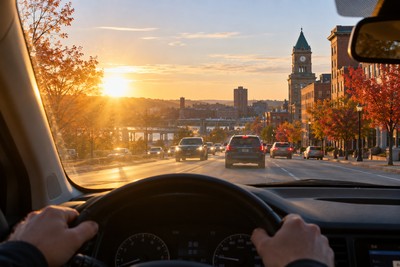
October brings shorter daylight hours and a lower sun angle to New Hampshire. During common commuting periods, sunlight can strike a windshield almost directly, making it difficult to see what is happening ahead even when the sky is clear.
The problem can become more pronounced when glare combines with ordinary fall driving conditions. Windshields may have condensation, dust, streaks, or moisture that scatter bright light. Trees, buildings, overpasses, and hills can also create abrupt changes between shadow and intense sunlight.
In Manchester, those visibility changes can matter on busy city streets, at intersections, near highway entrances, and along routes where traffic slows quickly. The legal question after a crash is not simply whether the sun was bright. The question is whether each driver acted reasonably under the conditions that existed at the time.
Sun Glare Does Not Automatically Excuse a Driver
New Hampshire motorists are expected to use reasonable care while driving. RSA 265:60 requires motorists to drive at a speed that is reasonable and prudent under existing conditions and hazards.
That rule can become central in a sun-glare accident. If a driver cannot clearly see a traffic signal, vehicle, crosswalk, or lane ahead, continuing at the same speed may create an unreasonable risk. Depending on the circumstances, a careful driver may need to slow down, increase following distance, use a sun visor, clean the windshield, or stop in a safe place until visibility improves.
Investigators and insurance companies may consider whether a driver:
- Was traveling too fast for the available sight distance
- Followed another vehicle too closely
- Failed to stop for traffic that was visible with reasonable care
- Entered an intersection without being able to see that it was clear
- Changed lanes when glare limited the ability to check surrounding traffic
- Failed to use ordinary vehicle features, such as a sun visor
- Was distracted while glare was affecting visibility
For more information about local collision claims, visit:
https://www.tennandtenn.com/manchester-car-accident-lawyers/

James J. Tenn, Jr.
Attorney

Mary Elizabeth Tenn
Attorney

John J. Tenn
Attorney
Common October Sun-Glare Crash Scenarios
Sun glare can contribute to several types of Manchester car accidents.
Rear-end collisions are one example. A driver traveling toward a low morning or afternoon sun may not recognize that traffic has stopped until there is too little distance left to brake safely.
Intersection crashes can also occur when glare makes a traffic signal, turning vehicle, bicyclist, or pedestrian difficult to see. A driver may believe the intersection is clear even though another person or vehicle has the right of way.
Lane-change accidents are another possibility. Bright light can wash out lane markings or make vehicles in adjoining lanes harder to detect. If a driver changes lanes without having a clear view, a sideswipe or more serious collision can follow.
Glare-related crashes may also happen near entrances and exits where traffic patterns change quickly. A driver who cannot see clearly may fail to notice a slowing vehicle, merging traffic, or a line of vehicles forming ahead.
These cases often involve more than one contributing factor. Glare may reduce visibility, while speed, distraction, following distance, or unsafe turning behavior increases the risk of a collision.
Millions in Verdicts & Settlements
The attorneys at Tenn And Tenn are ready to help you solve your legal problems and obtain results.
$9,000,000
Pedestrian Accident
$2,225,000
Motorcycle Collision
$2,224,000
CarAccident
What Evidence Can Show How Sun Glare Affected a Crash?
Sun-glare cases can be difficult because lighting conditions change quickly. By the time an insurance adjuster, investigator, or attorney examines the scene, the sun may have moved enough that visibility looks different.
Evidence can help reconstruct what a driver could reasonably see at the time of the collision.
Useful evidence may include:
- Photographs showing the direction of travel and position of the sun
- Dash camera footage from either vehicle
- Traffic-camera, business, or residential surveillance footage
- Witness statements describing visibility immediately before the crash
- Police observations about lighting and road conditions
- Vehicle event data when available and relevant
- Vehicle damage and impact points
- Skid or tire marks
- Cell phone records if distraction is alleged
- Weather and astronomical information showing the sun’s position
Photographs taken close to the time of the crash may be especially useful. They can show whether the sun was directly ahead, whether shadows affected visibility, and whether roadway signs, signals, or other vehicles were difficult to see.
Key Point: Sun position and lighting can change quickly. Evidence gathered close to the time of the crash may provide a clearer picture of the conditions each driver faced.
Drivers seeking practical information about what to do after a crash can review:
https://www.tennandtenn.com/what-to-do-if-youre-in-a-new-hampshire-auto-accident/
Can More Than One Driver Share Fault?
Yes. New Hampshire follows a modified comparative fault system under RSA 507:7-d.
Under this rule, an injured person’s compensation can be reduced according to that person’s percentage of fault. If the injured person is found to be more at fault than the combined fault of the parties from whom recovery is sought, recovery can be barred.
This can become especially relevant in a sun-glare crash.
One driver may argue that the low sun made it impossible to see stopped traffic. The other driver may be accused of stopping abruptly, making an unsafe turn, failing to signal, or contributing to the crash in another way.
The evidence may show that one driver was primarily responsible. It may also show that several people shared responsibility.
Insurance companies may use glare as part of a comparative-fault argument. They may claim that the injured driver also had limited visibility and should have reacted differently. Photographs, video, witness accounts, vehicle damage, and a detailed timeline can become valuable when these arguments arise.
For broader information about Manchester personal injury claims, visit:
https://www.tennandtenn.com/manchester-personal-injury-lawyers/
What Should You Do After a Sun-Glare Accident?
Your first priority should be safety and medical care.
Move away from active traffic if you can do so safely. Call emergency services when appropriate. Seek medical evaluation for injuries or symptoms that concern you.
If conditions allow, document the scene before the lighting changes.
Take photographs showing:
- The direction each vehicle was traveling
- The position of the sun
- Vehicle damage
- Traffic lights and signs
- Lane markings
- Intersections or roadway curves
- Nearby trees, buildings, or structures affecting visibility
Do not place yourself in danger by standing in traffic to take photographs.
Write down the exact time of the crash while it is still fresh in your memory. Record whether the sun was directly ahead, whether another vehicle stopped suddenly, whether traffic signals were difficult to see, and any statements made by witnesses or drivers.
Exchange insurance and contact information with the other driver. If witnesses stopped, ask for their names and phone numbers.
When speaking with an insurance company, provide accurate facts but avoid guessing about speed, distance, fault, or what another driver could see. You may not yet have enough information to answer those questions accurately.
Keep copies of medical records, repair estimates, towing bills, rental expenses, wage information, photographs, and insurance correspondence.
For answers to common insurance and claim questions, visit:
https://www.tennandtenn.com/faq/car-accident-faq/
How Long Do You Have to Bring a New Hampshire Car Accident Claim?
New Hampshire RSA 508:4 generally provides a three-year limitations period for personal actions, subject to the statute’s terms and exceptions.
A filing deadline does not mean that delaying a claim is advisable. Evidence can disappear long before the limitations period expires.
Surveillance footage may be erased. Vehicles may be repaired or sold. Witnesses can become harder to locate. Road conditions can change. A glare-related case may depend heavily on proving what the scene looked like at a specific time of day.
Preserving evidence early can make it easier to evaluate whether glare, driver conduct, roadway design, distraction, speed, or another factor caused the collision.
More information about filing deadlines is available at:
https://www.tennandtenn.com/understanding-new-hampshires-statute-of-limitations-for-car-accident-claims/
How a Manchester Car Accident Lawyer Can Help
A lawyer can investigate whether sun glare was simply part of the driving environment or whether another driver’s choices were a primary cause of the crash.
That investigation may include police reports, photographs, witness interviews, vehicle records, insurance information, medical records, available video, and evidence of lost income or other financial losses.
In more serious cases, technical analysis may help explain sight lines, stopping distance, vehicle movement, or the position of the sun at the time of impact.
A lawyer can also evaluate comparative-fault allegations, communicate with insurers, document damages, and determine whether available insurance coverage may apply.
Tenn And Tenn, PA represents injured people in Manchester and throughout New Hampshire. The firm can review the circumstances of a collision, explain the claims process, and discuss how New Hampshire law may apply to the available evidence.
Speak With a Manchester Car Accident Attorney
An October crash involving sun glare can leave you dealing with injuries, medical expenses, missed work, vehicle damage, and competing accounts of what happened.
If you were injured in a Manchester car accident, Tenn And Tenn, PA can review the facts and help you understand your legal options. The firm offers consultations for people seeking information about a potential claim.
Call or visit:
https://www.tennandtenn.com/contact-us/
Tenn And Tenn, PA serves clients in Manchester and throughout New Hampshire.
This article is for informational purposes only and is not legal advice. Consult an attorney about your specific situation.


 |

 |