
Road-surface photos can help explain why a motorcycle lost traction in Manchester, New Hampshire. Images of gravel, potholes, spilled fluids, uneven pavement, or roadwork debris may document the condition that caused a slide-out. Wide views and close-ups can also help investigators assess where the hazard was located, whether warnings were present, and whether someone other than the rider may bear responsibility. A photograph alone does not prove negligence, but timely images can preserve critical details before the road changes.
Why Road-Surface Evidence Matters After a Motorcycle Slide-Out
A slide-out occurs when a motorcycle loses traction and falls or slides across the road. Another vehicle does not need to be involved. Because a motorcycle relies on relatively small tire contact areas, surface changes can matter during a turn, braking, or a change in direction.
Road hazards that may contribute to a slide-out include:
- Loose gravel or sand at curves and intersections
- Potholes, cracks, and crumbling pavement
- Oil, diesel fuel, or other slippery substances
- Uneven pavement and raised edges near construction zones
- Wet leaves, mud, or scattered debris
- Deteriorated road repairs
Insurers may examine the rider’s speed, braking, tires, and other possible causes. Photos of an identifiable hazard can provide context for evaluating those issues. Learn more about how a New Hampshire motorcycle accident lawyer may review a crash claim.
New Hampshire motorcycle accident lawyers

James J. Tenn, Jr.
Attorney

Mary Elizabeth Tenn
Attorney

John J. Tenn
Attorney
What Should Road-Surface Photos Show After a Manchester Motorcycle Crash?
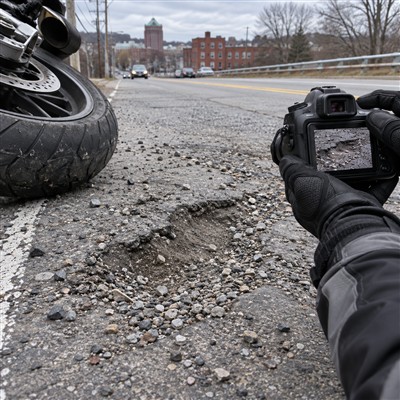
A useful set of images shows both the road defect and its location in the rider’s path. If conditions are safe, capture the following perspectives:
1. Wide-Angle Views of the Accident Location
Show the full lane, nearby intersections, road markings, surrounding landmarks, and any available escape space. These pictures help establish the scene’s layout.
2. Close-Ups of the Road Hazard
Photograph pothole edges, gravel coverage, slick material, or uneven pavement. If safe, use an object or measuring tape to show scale without moving anything at the scene.
3. The Motorcycle’s Approach Direction
Take pictures from an area that approximates what the rider could see while approaching. Document visibility, turns, slopes, and the location of the hazard. Never stand in active traffic to recreate the rider’s perspective.
4. Scrape Marks, Tire Marks, and Debris
Record visible tire marks, road scrapes, detached motorcycle components, and the final resting position when available. A reconstruction specialist may consider these details alongside other evidence.
5. Signs, Barriers, and Roadwork
Capture nearby warning signs, temporary barriers, construction equipment, and the boundaries of any work zone. These details may help determine whether a hazard was identified or warning measures were present.
Key point: A photograph can establish what a road looked like after a crash. Proving legal responsibility also requires evidence of duty, causation, and the applicable liability rules.
How Can Photos Help Explain What Caused the Motorcycle to Slide?
Consider a hypothetical Manchester intersection where loose gravel covers part of a turning lane. A motorcyclist leans through the turn, loses traction, and falls. Pictures taken soon afterward show the gravel, pavement markings, approach direction, and motorcycle position.
Those images could support the rider’s description of the slide-out. Investigators would still need to establish when the gravel appeared, where it came from, whether it caused the loss of traction, and whether a person or organization had a legal responsibility to address it.
See What Our Clients Are Saying About Us

Attorney John Tenn and his entire team are amazing people! If you need a lawyer, he is the man to call! He handled my case in a professional matter and took the stress out of it all.
Mallory C.

The whole team were very professional and responsive. My case was effectively handled with good communication during the process. Very satisfied with the outcome. Highly recommend!
A. McMillan
Who May Be Responsible for a Hazardous Road Surface?
The source of the hazard, control of the area, and the applicable legal duty help determine potential responsibility. Depending on the evidence, an investigation may consider:
- A construction contractor that allowed material to enter an active lane
- A commercial vehicle operator whose unsecured cargo left debris
- A property owner or business that controlled the relevant area
- A public road authority, subject to specific statutory limitations
Fresh gravel beside a work zone or a fluid trail near equipment may suggest investigative leads, but neither image automatically identifies a liable party. Reports, witnesses, contractor records, maintenance logs, and other evidence can help connect the condition to a legally responsible person or entity.
What Does New Hampshire Law Say About Dangerous Road Conditions?
Different legal standards can apply depending on who maintains the road. For certain municipal highways, RSA 231:90 defines an ‘insufficiency,’ including a roadway that cannot be safely passed or a hazard not reasonably discoverable or avoidable by a prudent traveler following applicable rules.
Under RSA 231:92, municipal liability is limited. Depending on the circumstances, a claim may require an insufficiency and proof of a statutory ground for liability, such as appropriate written notice followed by a failure to respond, certain actual knowledge combined with gross negligence or bad faith, or other conduct specifically addressed by the statute. Ordinary evidence that a pothole existed is not enough by itself.
RSA 231:92-a provides separate protections for hazards caused solely by snow, ice, or other inclement weather when a municipality follows a good-faith maintenance policy, subject to the statute’s exceptions. The authority responsible for a Manchester street may differ from the authority responsible for a state-maintained highway.
The official statutes are available here:
RSA 231:90, Duty of Town After Notice of Insufficiency
RSA 231:92, Liability of Municipalities
RSA 231:92-a, Snow, Ice and Other Weather Hazards
Can Road Photos Help Challenge Claims That the Rider Was at Fault?
Yes. Images may help assess whether a hazard was visible, whether warnings existed, and whether the rider could reasonably avoid the condition. New Hampshire follows a modified comparative-fault rule under RSA 507:7-d. A plaintiff may still recover damages when the plaintiff’s fault is not greater than the fault of the defendant or defendants, in the aggregate where applicable. Recoverable damages are reduced in proportion to the plaintiff’s assigned fault.
For example, if total recoverable damages are $100,000 and a rider is found 20 percent at fault, the amount after that reduction would be $80,000, before consideration of other legal issues. The applicable rule and its operation depend on the parties and facts.
RSA 507:7-d, Comparative Fault (https://gc.nh.gov/rsa/html/LII/507/507-7-d.htm)










Why Should You Photograph the Road as Soon as Possible?
Road conditions can change quickly. Traffic may scatter gravel, rain may wash away fluid, crews may repair broken pavement, or signs may be relocated. Images made close to the crash may preserve details that later inspections cannot show.
Your medical needs and safety come first. If injuries prevent you from taking pictures, a trusted person can document the location when doing so is safe. An attorney may investigate whether traffic footage, maintenance records, or other images exist.
How Should Motorcycle Accident Photos Be Preserved?
Keep original files so their contents and available metadata remain intact. Practical preservation steps include:
- Save original files with available date, time, and location data.
- Back up photos to secure storage without overwriting the originals.
- Keep edited or annotated copies separate from originals.
- Write down the road location, approximate crash time, and direction of travel.
- Record who took each picture and when.
- Organize images with police reports, witness information, and medical records.
These steps make it easier to explain where an image came from and what it depicts. Related guidance on personal injury investigations is available through the firm’s injury practice page.
New Hampshire personal injury lawyers
What Other Evidence Can Support Road-Surface Photographs?
Police reports, witness statements, roadway maintenance records, prior complaints, construction documents, video recordings, and motorcycle inspections can help establish how the slide-out happened. Medical records and employment information may support the nature and extent of claimed losses.
A qualified reconstruction professional may compare the roadway photos with physical marks, vehicle damage, the rider’s path, and other available evidence. This review may help distinguish a road hazard from another contributing factor.
Millions in Verdicts & Settlements
The attorneys at Tenn And Tenn are ready to help you solve your legal problems and obtain results.
$9,000,000
Pedestrian Accident
$2,225,000
Motorcycle Collision
$2,224,000
CarAccident
Frequently Asked Questions About Motorcycle Slide-Out Evidence
Can You Make a Claim Without Another Vehicle Being Involved?
Possibly. A claim may exist against a legally responsible contractor, vehicle operator, property owner, or other party. Claims against public entities require additional analysis of applicable protections and statutory requirements.
Are Cellphone Photographs Useful Evidence?
Yes. Cellphone images may help establish scene conditions if they are authentic, relevant, and supported by information about when and where they were captured. Original files may assist with verification.
What Happens if the Road Hazard Has Already Been Repaired?
Earlier photos, witness statements, roadwork documents, and inspection records may still help explain conditions at the time of the crash. The legal treatment of later repairs depends on the applicable evidence rules.
Can You Pursue a Claim Without Scene Photographs?
Possibly. Investigators may rely on witness accounts, reports, video, repair records, vehicle damage, and other evidence. Photographs can strengthen an investigation but are not required for every viable claim.
How Long Do You Have to File a Motorcycle Injury Lawsuit in New Hampshire?
RSA 508:4 generally provides a three-year period for many personal injury actions, measured from the relevant act or omission, with a discovery provision and other legal exceptions. Claims involving public entities can have distinct requirements, so prompt legal review is advisable.
Speak With a Manchester Motorcycle Accident Attorney
If you were hurt in a slide-out in Manchester, New Hampshire, or a nearby community, Tenn And Tenn, PA can assess the available evidence, investigate who controlled the roadway, and discuss potential legal options. The firm has represented New Hampshire injury clients since 1995 and emphasizes direct, personalized attention.
Contact Tenn And Tenn, PA to request a complimentary personal injury consultation. You can also review the firm’s motorcycle accident services and client experiences:
New Hampshire motorcycle accident lawyers
This article provides general information, not legal advice. The facts and deadlines of your particular case require individual legal review.


 |

 |