
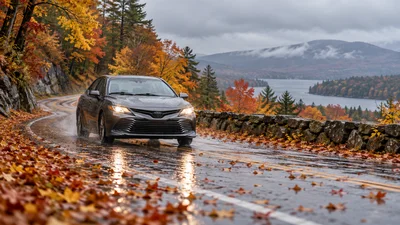
Wet leaves can make New Hampshire roads slick, especially after rain, fog, or morning moisture settles on fallen leaves. If a crash follows, liability does not turn on the leaves alone. The main questions are whether each driver used reasonable care for the conditions, whether more than one person contributed to the collision, whether a roadway maintenance issue played a role, and what the evidence shows.
New Hampshire law requires drivers to use a speed that is reasonable and prudent for existing conditions and hazards. Drivers must also use an appropriate reduced speed when weather or highway conditions create a special hazard. Wet leaves may become part of that analysis when they affect traction, visibility, braking, or the ability to stay within a lane.
Tenn And Tenn, PA represents people in New Hampshire personal injury matters, including car accident claims. If a wet-leaf crash causes injuries, a careful review of driver conduct, road conditions, vehicle condition, photographs, video, witness statements, and applicable insurance coverage can help show how the collision occurred.
Road conditions do not automatically excuse unsafe driving. Liability depends on what each person did and what the evidence shows.








Why Wet Leaves Can Lead to Serious Fall Crashes
Wet leaves can reduce tire grip and make steering or braking more difficult. They can also cover lane markings, potholes, road defects, and standing water. A driver may encounter the greatest risk where leaves collect in shaded areas, on curves, on downhill grades, or along roads bordered by dense trees.
When a driver reaches a slick patch, the vehicle may slide, drift, or require more distance to slow. Those conditions can become more dangerous when a driver is already traveling too fast for the road, following another vehicle too closely, changing lanes abruptly, or driving with poor visibility.
New Hampshire RSA 265:60 states that a person may not drive at a speed greater than is reasonable and prudent under the conditions and actual or potential hazards. It also requires an appropriate reduced speed when weather or highway conditions create a special hazard. A posted speed limit does not make every speed up to that limit reasonable under every set of conditions.
New Hampshire RSA 265:60:
https://gc.nh.gov/rsa/html/XXI/265/265-60.htm
For more seasonal driving information, see:
https://www.tennandtenn.com/the-dangers-of-wet-leaves-on-the-road-and-what-to-do-about-them/

James J. Tenn, Jr.
Attorney

Mary Elizabeth Tenn
Attorney

John J. Tenn
Attorney
Who May Be Liable When a Driver Slides on Wet Leaves?
Liability depends on the conduct that led to the crash. A driver may bear responsibility if that person approached a leaf-covered curve too quickly, braked too late, lost control, and crossed the center line. A following driver may bear responsibility for leaving too little space to stop. A driver who changes lanes without enough room or turns across traffic may also contribute to the collision.
New Hampshire RSA 265:25 provides that a driver may not follow another vehicle more closely than is reasonable and prudent, taking into account vehicle speed, traffic, and the condition of the roadway.
New Hampshire RSA 265:25:
https://gc.nh.gov/rsa/html/XXI/265/265-25.htm
Consider a rear-end crash in Manchester. The first driver slows before a curve where wet leaves cover part of the lane. A second driver is following closely and cannot stop before impact. The second driver may claim that the first vehicle slowed abruptly. The first driver may explain that reducing speed was necessary because of the road conditions. The outcome may depend on photographs, dashcam footage, witness accounts, vehicle damage, braking evidence, road conditions, and the drivers' statements.
For more information about fault after a New Hampshire collision, see:
https://www.tennandtenn.com/proving-fault-in-new-hampshire-car-accidents/
Can Both Drivers Share Fault?
Yes. New Hampshire uses a modified comparative fault rule under RSA 507:7-d. An injured person may recover damages when that person's fault is not greater than the fault of the defendant, or the combined fault of multiple defendants when recovery is allowed against more than one defendant. Any damages awarded are reduced according to the injured person's percentage of fault.
For example, one driver may have been traveling too fast for a wet, leaf-covered road while another driver made an unsafe turn across that driver's path. A judge or jury could assign a percentage of fault to each person based on the evidence.
If an injured person is found 20 percent at fault, a damages award would be reduced by 20 percent. If that person's fault is greater than the fault of the defendant or defendants as described in RSA 507:7-d, recovery is barred under that rule.
New Hampshire RSA 507:7-d:
https://gc.nh.gov/rsa/html/LII/507/507-mrg.htm
Insurance companies may argue that an injured driver contributed to the crash. A statement such as "you slid first" does not resolve fault by itself. The analysis focuses on why the slide occurred, whether the driver acted reasonably before losing traction, and whether another person's conduct contributed to the collision.
Millions in Verdicts & Settlements
The attorneys at Tenn And Tenn are ready to help you solve your legal problems and obtain results.
$9,000,000
Pedestrian Accident
$2,225,000
Motorcycle Collision
$2,224,000
CarAccident
Could a Town or City Be Responsible for Leaves on the Road?
A claim involving a public roadway requires a different analysis from a claim against another driver. New Hampshire has specific statutes governing municipal highway liability.
RSA 231:90 addresses when certain class IV or class V highways, bridges, or sidewalks may be considered insufficient. RSA 231:91 addresses a municipality's response after receiving qualifying notice of an insufficiency. RSA 231:92 sets limits on municipal liability and addresses notice, actual knowledge, and certain acts that may create an insufficiency.
New Hampshire RSA 231:90:
https://gc.nh.gov/rsa/html/XX/231/231-90.htm
New Hampshire RSA 231:91:
https://gc.nh.gov/rsa/html/XX/231/231-91.htm
New Hampshire RSA 231:92:
https://gc.nh.gov/rsa/html/XX/231/231-92.htm
RSA 231:92-a also addresses snow, ice, and other weather hazards. It provides protection from liability in specified circumstances when a hazard is caused solely by snow, ice, or other inclement weather and the municipality or school district is carrying out a good-faith winter or inclement weather maintenance policy, absent gross negligence or reckless disregard of the hazard.
New Hampshire RSA 231:92-a:
https://gc.nh.gov/rsa/html/XX/231/231-92-a.htm
A pile or layer of wet leaves does not automatically create a valid claim against a town or city. The analysis may depend on the classification of the road, whether the condition met the statutory definition of an insufficiency, whether the municipality had the notice or knowledge required by law, how officials responded, and whether RSA 231:92-a or another statutory protection applies.
Roadway claims can involve legal requirements that differ from an ordinary claim against another driver. When road maintenance appears central to a crash, early investigation can help preserve evidence before leaves are cleared or conditions change.
What Evidence Can Help Prove Liability?
Wet-leaf conditions can change quickly. Traffic can scatter leaves, rain can move them, road crews can clear them, and sun or wind can dry the pavement. Prompt documentation may help preserve what the road looked like at the time of the crash.
Useful evidence may include:
- Photographs showing the location, amount, and spread of the leaf accumulation
- Close-up images showing whether the leaves were wet, compacted, or mixed with standing water
- Wider photographs showing curves, hills, sight lines, lane markings, intersections, and nearby signs
- Vehicle positions and visible damage
- Tire marks, debris, guardrails, and other physical evidence
- Dashcam, traffic camera, doorbell camera, or nearby surveillance footage
- Statements from independent witnesses
- The police crash report and officer observations
- Weather records tied to the time and location of the collision
- Vehicle inspection records if tire condition, brakes, or mechanical issues are disputed
- Repair estimates, medical records, and insurance communications
More information about preserving crash evidence is available at:
https://www.tennandtenn.com/how-to-gather-evidence-after-a-car-accident-in-new-hampshire/
A photograph taken immediately after a collision may show a roadway covered with wet leaves. A photograph taken two days later may show dry pavement after traffic, weather, or road maintenance changed the scene. Early photographs can give insurers, attorneys, and accident reconstruction professionals a clearer record of the conditions present near the time of the crash.
How Insurance Companies May Approach a Wet-Leaf Crash
An insurance adjuster may review the police report, driver statements, photographs, video, witness accounts, vehicle damage, traffic laws, road conditions, and available medical records. The adjuster may also look at whether a driver reduced speed, increased following distance, reacted reasonably to a visible hazard, or maintained the vehicle in a condition suitable for driving.
An insurer's first fault decision does not control the legal outcome of a claim. New evidence may change how responsibility is evaluated, especially when the drivers provide different accounts of the collision.
Coverage issues may also affect the claim. Depending on the policies and circumstances involved, relevant coverage may include bodily injury liability, collision, medical payments, or uninsured or underinsured motorist coverage.
More information about insurance issues after a New Hampshire car accident is available at:
https://www.tennandtenn.com/the-role-of-insurance-in-new-hampshire-car-accident-claims/
What Should You Do After a Wet-Leaf Car Accident?
Start with safety and medical needs. Move away from active traffic when you can do so safely. Call 911 when emergency assistance is needed. Seek medical care for injuries or symptoms that need evaluation.
If conditions allow, take photographs before leaves are moved, scattered, or cleared. Capture both the broader scene and close-up images of the road surface. Preserve any dashcam footage and identify nearby homes or businesses that may have recorded the collision.
Other steps may include:
- Exchange required driver and insurance information
- Identify witnesses and obtain their contact information
- Give accurate information to the responding officer
- Avoid guessing about facts you did not see
- Keep copies of medical records, repair estimates, photographs, and insurance communications
- Preserve damaged personal property or vehicle components if they may become evidence
- Note the time, weather, lighting, road condition, and any nearby road work or maintenance activity
A driver may know that the vehicle slid without knowing what another driver was doing before the impact. Evidence from the scene can help answer that question later.
If the crash caused significant injuries, involved disputed fault, included several vehicles, or raised a possible roadway maintenance issue, legal guidance can help identify the evidence and legal requirements that may affect the claim.
Speak With a New Hampshire Car Accident Attorney
A wet-leaf crash can raise questions about speed, following distance, lane position, comparative fault, roadway maintenance, vehicle condition, and insurance coverage. Tenn And Tenn, PA can review the circumstances, explain how New Hampshire law may apply, and discuss the legal options available based on the evidence.
Tenn And Tenn, PA serves clients across New Hampshire, including Manchester and nearby communities.
For information about Manchester car accident representation, visit:
https://www.tennandtenn.com/manchester-nh-car-accident-lawyers/
To contact Tenn And Tenn, PA, visit:
https://www.tennandtenn.com/contact-us/
Call (603) 614-5055:
This article is for general informational purposes only and is not legal advice. Every case depends on its specific facts and applicable law. Consult an attorney about your circumstances.


 |

 |