
October car accidents on New Hampshire rural roads may involve slippery leaves, limited daylight, deer crossings, blind curves, and drivers who fail to adjust to changing conditions. If another driver caused or contributed to your injuries through negligence, you may be able to recover compensation for medical expenses, lost income, and other damages. New Hampshire's comparative fault law can also affect your claim when more than one driver shares responsibility.
If you were injured in a rural road collision near Manchester, Goffstown, Bedford, Candia, Derry, or another New Hampshire community, document the crash, obtain medical care, and consider discussing the evidence with a car accident attorney.








Why October Rural Roads Can Create Greater Accident Risks
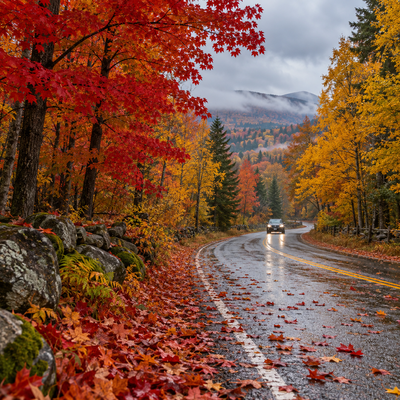
Rural roads often have narrow shoulders, sharp bends, hills, wooded intersections, and limited lighting. During October, wet pavement, fallen leaves, early sunsets, and increased seasonal traffic may make those features harder to navigate.
Fall foliage draws visitors to scenic areas across New Hampshire. Drivers unfamiliar with a winding road may brake unexpectedly, drift toward the centerline, or become distracted by the scenery. Local motorists may also underestimate how quickly road conditions change after rain or near freezing temperatures.
A seasonal hazard does not automatically establish fault. The central legal question is whether a person failed to use reasonable care and whether that conduct caused an injury.
5 Fall Driving Hazards That Contribute to Rural Road Crashes
1. Wet Leaves and Reduced Tire Traction
Wet leaves can collect beneath trees, around turns, and near intersections. They may reduce tire traction or hide pavement markings, potholes, and uneven road surfaces. A driver approaching a leaf-covered curve too quickly may have difficulty braking or steering safely.
When another driver's unreasonable speed or loss of control contributes to a collision, liability may be disputed based on the available evidence. For a more focused discussion, read Wet Leaves and Car Accidents in New Hampshire: Who May Be Liable?.

James J. Tenn, Jr.
Attorney

Mary Elizabeth Tenn
Attorney

John J. Tenn
Attorney
2. Shorter Days and Limited Visibility
New Hampshire daylight hours decrease throughout October. Evening commutes may occur at dusk or after dark, particularly on rural roads without streetlights. Sun glare during morning and late-afternoon travel can also make approaching traffic, pedestrians, and road markings difficult to see.
Drivers should adjust their speed to the visibility available, use headlights appropriately, and remain alert near curves, intersections, and wooded shoulders.
3. Deer and Other Wildlife
Deer activity can increase during the autumn breeding season. An animal may enter the road suddenly, leaving little time to respond. A driver who swerves into oncoming traffic can cause a serious collision, even without striking the animal.
A deer crossing alone does not establish negligence. When another motorist is involved, an investigation may examine speed, distance, visibility, and whether the response was reasonable under the circumstances. See New Hampshire Deer Collision Claims: Insurance, Fault, and Compensation for additional information.
4. Blind Curves and Narrow Shoulders
Wooded rural roads may have sharp curves, steep grades, and limited space for avoiding an approaching vehicle. Wet pavement and leaf-covered lane markings can make these conditions more challenging.
Consider a hypothetical crash outside Goffstown. An approaching driver takes a blind curve too quickly and crosses the centerline, striking a vehicle traveling in the opposite direction. Evidence that the driver failed to maintain a safe speed and lane position could support a negligence claim.
Millions in Verdicts & Settlements
The attorneys at Tenn And Tenn are ready to help you solve your legal problems and obtain results.
$9,000,000
Pedestrian Accident
$2,225,000
Motorcycle Collision
$2,224,000
CarAccident
5. Distracted Driving During Foliage Season
Drivers who look away from the road to admire foliage, check directions, or photograph scenery may miss a curve, stopped vehicle, or pedestrian. Unexpected stopping on a narrow road can also endanger nearby traffic.
New Hampshire RSA 265:79-c restricts the use of handheld electronic devices while driving, subject to statutory exceptions. Even when a particular action does not violate that statute, distracted conduct may still be relevant to a negligence claim.
Who May Be Liable for an October Rural Road Accident?
Liability depends on the conduct of the people involved and the evidence showing how the crash occurred. Dangerous road conditions do not automatically excuse unsafe driving.
Examples of potentially negligent conduct include:
- Driving too fast for wet, dark, or curved roads.
- Following another vehicle too closely.
- Crossing the centerline while rounding a bend.
- Looking at a phone or scenery instead of the roadway.
- Failing to yield at an intersection.
- Driving while impaired or ignoring visible hazards.
In some cases, multiple drivers may share fault. For example, one driver may enter a curve too quickly while another drifts partly over the centerline. An investigation may assess both actions rather than assigning blame based on weather alone.
Photographs, witness accounts, vehicle damage, police reports, and available electronic evidence can help establish what occurred. Claims involving road maintenance, roadway design, or vehicle defects require separate factual and legal analysis.
How Does New Hampshire Comparative Fault Affect Compensation?
New Hampshire uses a modified comparative fault rule under RSA 507:7-d. Generally, an injured person can recover damages when that person's fault is not greater than the fault of the defendant or the combined fault of defendants against whom recovery is allowed. The award is reduced by the injured person's share of fault.
For example, if legally recoverable damages total $100,000 and the injured driver is 20% at fault, the adjusted amount would generally be $80,000. A driver found 50% responsible is not automatically barred from recovery under this rule. A driver found more than 50% responsible generally cannot recover under the ordinary comparative fault framework when the remaining fault is attributed to the defendant or defendants.
Seasonal road conditions may explain how a crash happened, but they do not by themselves determine legal responsibility. Evidence of each driver's conduct matters.
Insurers may argue that an injured person traveled too fast for conditions or reacted improperly to a hazard. A careful review of the circumstances can help address disputed fault.
What Should You Do After a Rural Road Car Accident?
After a crash, prioritize safety and medical care. Then preserve information that may help explain the collision.
- Move to a safer location when possible. request emergency assistance if someone is injured or emergency assistance is needed. Avoid standing in an active travel lane.
- Obtain medical attention. Describe your symptoms and follow recommended care. Some injuries become more apparent after the initial shock subsides.
- Photograph the conditions. If it is safe, capture vehicle positions, damage, fallen leaves, roadway curves, traffic signs, lighting, and visible injuries.
- Exchange information. Obtain driver, vehicle, and insurance details, along with contact information for witnesses.
- Follow reporting requirements. Cooperate with responding officers and determine whether an additional accident report is required.
- Keep important records. Save treatment records, receipts, repair estimates, insurance letters, photographs, and notes about the crash.
You can find additional guidance in What to Do If You Are in a New Hampshire Auto Accident.
What Compensation May Be Available After a Rural Road Crash?
If another party's negligence caused your injuries, recoverable damages may include:
- Past and reasonably anticipated medical expenses.
- Rehabilitation and related treatment costs.
- Lost wages and reduced future earning capacity.
- Physical pain and emotional suffering.
- Other losses supported by the facts and applicable law.
Collisions on rural roads can cause fractures, concussions, spinal injuries, and other lasting conditions. The value of a claim depends on the injuries, liability evidence, available coverage, treatment needs, and how the injuries affect daily life.
Before resolving a claim, consider whether your medical condition and future treatment needs are sufficiently understood.
How Long Do You Have to File a New Hampshire Car Accident Lawsuit?
Under RSA 508:4, most New Hampshire personal injury actions are subject to a three-year filing period measured from the relevant act or omission. Certain discovery-related exceptions and other legal rules may affect the applicable deadline.
Deadlines for accident reporting, insurance notice, and claims involving public entities can differ from the general lawsuit deadline. Prompt attention also helps preserve evidence before vehicles are repaired, road conditions change, or witnesses become difficult to reach.
How Can a New Hampshire Car Accident Attorney Help?
A car accident attorney can review the circumstances of a rural road collision, assess liability, and help identify the evidence needed to support an injury claim. Legal assistance may include:
- Investigating the accident and reviewing available reports.
- Gathering photographs, witness statements, and relevant records.
- Evaluating disputed comparative fault.
- Reviewing medical documentation and financial losses.
- Communicating with insurers and negotiating a potential resolution.
- Filing a lawsuit when appropriate.
The right legal strategy depends on the particular facts. Not every accident involving leaves, wildlife, a curve, or poor lighting creates a viable claim against another person or public agency.
How Can You Reduce October Driving Risks?
These precautions can help drivers respond to changing autumn conditions:
- Reduce speed before sharp curves and wooded intersections.
- Leave more distance between vehicles on wet roads.
- Keep headlights, windows, and windshield wipers in working condition.
- Remain alert for deer around dawn and dusk.
- Avoid handheld device use and other distractions.
- Check tire condition before longer drives.
- Plan scenic stops at designated, safe locations.
- Brake and steer gradually when traction is limited.
A driver traveling below the posted speed limit may still be moving too quickly for the actual conditions. Adjusting to visibility, pavement, and traffic can reduce risk.
Frequently Asked Questions About October Car Accidents
Can I Make a Claim if Wet Leaves Contributed to a Collision?
Possibly. Wet leaves alone do not prove another party was negligent. You may have a claim if another person's unreasonable driving contributed to your injuries.
Who Is Responsible if a Driver Swerves to Avoid a Deer?
Responsibility depends on the circumstances. A review may consider the driver's speed, sight distance, control of the vehicle, and whether the response was reasonable.
Can I Share Fault Even if I Drove Below the Posted Speed Limit?
Yes. A posted speed limit does not always represent a safe speed during poor visibility or slippery conditions. New Hampshire comparative fault rules may reduce compensation when your conduct contributed to the crash.
What Evidence Helps After an Accident on a Rural Curve?
Useful evidence may include photographs of the bend and lane markings, damage patterns, witness statements, police findings, weather conditions, and relevant recordings.
Do I Always Have Three Years to Take Legal Action?
No. Three years is the general limitations period for many New Hampshire personal injury lawsuits, but exceptions and different deadlines may apply. An attorney can help determine the deadline relevant to your circumstances.
Speak With a New Hampshire Car Accident Attorney
If you were injured in an October crash on a rural New Hampshire road, you may have questions about fault, medical expenses, insurance, and the compensation available to you.
Tenn And Tenn, PA represents injured people in New Hampshire. From its Manchester office, the firm helps clients in Goffstown, Bedford, Candia, Derry, and nearby communities evaluate personal injury claims through a personalized, client-focused approach.
Contact the firm online to discuss your accident and legal options.
This article is for general informational purposes only and does not constitute legal advice. Every case depends on its specific facts and applicable law.


 |

 |