
Frost and black ice create dangerous conditions for New Hampshire motorcyclists, particularly during fall mornings, early spring, and sudden overnight temperature drops. When a motorcycle accident involves an icy roadway, determining liability requires examining driver behavior, road conditions, and whether another party acted negligently. New Hampshire law allows injured motorcyclists to pursue compensation when another party’s negligence contributes to an accident, although comparative fault rules may affect recovery. Understanding these risks and legal protections can help riders make informed decisions after a crash.
Why Frost and Black Ice Are Dangerous for New Hampshire Motorcyclists
A clear autumn morning in New Hampshire can quickly become dangerous for motorcyclists when invisible ice forms across the roadway. Unlike snow-covered pavement, which provides an obvious warning, black ice often blends into the road surface.
Motorcycles are particularly vulnerable because they rely on two narrow tire contact patches for traction and balance. Even a small patch of ice can cause a sudden loss of control.
For riders traveling through Manchester, Bedford, Concord, or surrounding communities, changing temperatures can create unexpected hazards on otherwise familiar roads.
Black ice forms when moisture freezes into a thin, nearly transparent layer. It often develops when pavement temperatures fall below freezing, even when the surrounding air temperature is slightly warmer.
Common locations include:
- Bridges and overpasses that cool rapidly because air circulates beneath them.
- Shaded roads where sunlight cannot warm the pavement.
- Curves and intersections where braking or turning increases the risk of losing traction.
- Low-lying areas where moisture collects and freezes overnight.
- Rural roads where changing elevations and limited sunlight can produce isolated icy patches.
A motorcyclist may encounter dry pavement for several miles before suddenly reaching a frozen section.
Weather alone does not decide liability. The key question is whether a person or entity breached a legal duty and caused the crash.
When Are Frost and Black Ice Most Dangerous?
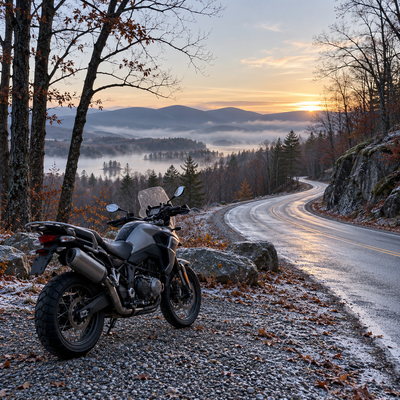
New Hampshire motorcycle riders often associate icy roads with winter. Yet dangerous freezing conditions can begin during autumn and continue into spring.
October and November can bring overnight frost, particularly after clear evenings when pavement loses heat.
Early spring creates similar challenges. Afternoon sunshine may melt accumulated snow or ice, allowing water to cross the roadway. When temperatures drop overnight, that moisture can refreeze.
Morning commuters face particular risks because shaded pavement may remain frozen after temperatures begin rising.
Consider a motorcyclist traveling through Bedford on an early November morning. The road appears dry until the rider approaches a shaded curve where overnight moisture has frozen. A nearby driver brakes abruptly, forcing the motorcyclist to react on the slippery surface.
The resulting accident may involve more than weather alone. Investigators must examine the driver’s actions, vehicle positioning, speed, and opportunity to avoid the collision.
The central legal question is whether another person’s failure to exercise reasonable care contributed to the rider’s injuries.
Can Someone Be Liable for a Motorcycle Accident Caused by Black Ice?
Black ice does not automatically establish negligence. Likewise, the presence of ice does not automatically excuse careless driving.
Under New Hampshire law, drivers must adjust their behavior according to existing road and weather conditions.
New Hampshire RSA 265:60 requires motorists to travel at speeds that are reasonable and prudent under the circumstances. The law also addresses reducing speed when weather, road conditions, curves, or other hazards require greater caution.
A driver traveling at the posted speed limit may still be driving too fast for icy conditions.
Potentially negligent behavior includes:
- Following a motorcycle too closely on slippery pavement.
- Driving too quickly for frost-covered roads.
- Making abrupt lane changes without adequate clearance.
- Failing to maintain reasonable control of a vehicle.
- Ignoring visible conditions that suggest freezing or reduced traction.
For example, a motorist approaching an icy intersection may fail to slow down and collide with a motorcycle already stopped for traffic.
Although black ice contributed to the collision, the driver’s failure to adjust speed could support a negligence claim.
Each accident requires an individual assessment of the available evidence.
What If the Motorcycle Rider Slips on Black Ice Without Another Vehicle?
Single-vehicle motorcycle accidents present different liability questions.
If a rider loses traction on an icy roadway without another person contributing to the accident, there may be no negligent third party responsible for the injuries.
Yet the absence of another vehicle does not necessarily eliminate every legal option.
Some accidents involve potentially dangerous roadway conditions, such as drainage problems, defective road construction, or maintenance issues that contributed to ice formation. A claimant must still establish a legally recognized duty, a breach of that duty, causation, and damages.
Claims involving public roads and government entities can involve immunity defenses, statutory notice rules, special procedures, and different deadlines. Responsibility for a naturally occurring icy condition should not be assumed, and a claim involving a road defect or negligent maintenance requires its own legal assessment.
A detailed investigation may help determine whether the accident involved a preventable hazard or a naturally occurring condition.
Motorcyclists seeking broader information about collision causes can review this resource on understanding motorcycle accidents in New Hampshire.
How Does Comparative Fault Affect a New Hampshire Motorcycle Accident Claim?
Insurance companies may argue that a motorcyclist should have recognized icy conditions or avoided riding during freezing temperatures.
That argument does not automatically defeat an injury claim.
New Hampshire follows a modified comparative fault system under RSA 507:7-d.
An injured person may recover damages when their share of fault is not greater than the fault attributed to the defendant or defendants collectively, where recovery against multiple defendants is permitted.
Compensation is reduced according to the injured person’s percentage of responsibility.
For example, suppose a motorcyclist suffers $100,000 in legally recoverable damages after a driver makes an unsafe turn on an icy road.
If the rider is found 20 percent responsible and the other driver 80 percent responsible, the recoverable amount would generally be reduced to $80,000 before considering other applicable legal issues.
If the rider’s share of fault exceeds 50 percent, recovery is generally barred under this rule.
Fault assessments may consider motorcycle speed, tire condition, lighting, visibility, braking behavior, and the actions of nearby drivers.
An experienced attorney can evaluate the evidence and challenge unsupported assumptions about motorcyclists.
Common Injuries From Frost and Black Ice Motorcycle Accidents
Even relatively low-speed motorcycle crashes can cause substantial injuries because riders have limited physical protection.
When a motorcycle slides on ice, the rider may strike the pavement, collide with another vehicle, or hit a stationary object.
Potential injuries include broken bones, shoulder injuries, spinal damage, traumatic brain injuries, and serious abrasions.
Some injuries require surgery, rehabilitation, or extended time away from employment. Others may produce lasting physical limitations or chronic pain.
Medical records can establish the nature of an injury and help connect treatment needs to the accident.
If you have symptoms of a head injury, seek prompt medical evaluation. Your treatment records may also help document your injuries.
Obtaining medical attention promptly also helps identify injuries that may not be immediately apparent after a collision.
What Should You Do After a Motorcycle Accident on Black Ice?
The moments following a motorcycle accident can feel overwhelming, particularly when freezing temperatures make the surrounding roadway unsafe.
Your immediate priority should be personal safety and medical care.
When emergency assistance is necessary, request it as soon as you can do so safely.
Once the situation is stable, consider these steps:
- Seek medical evaluation. Some injuries become more noticeable after the initial shock subsides.
- Report the collision. Contact law enforcement when required and obtain available accident report information.
- Document conditions. Photograph the roadway, surrounding vehicles, nearby ice, and visible damage when safe.
- Identify witnesses. Obtain contact details from anyone who observed the crash or relevant driving behavior.
- Preserve evidence. Keep damaged riding equipment, photographs, medical records, and repair estimates.
- Approach insurance discussions carefully. Avoid guessing about fault or minimizing injuries before their extent is known.
Ice can melt quickly after sunrise, making early documentation particularly valuable.
Photographs showing frost near the accident location may help establish conditions that disappear before an insurance investigation begins.
For broader guidance, review what to do after a New Hampshire auto accident.
What Compensation May Be Available After an Icy Road Motorcycle Crash?
When another party’s negligence causes a motorcycle accident, an injured rider may be entitled to pursue compensation for legally recognized losses.
Depending on the circumstances, recoverable damages may include medical expenses, future treatment, lost wages, diminished earning capacity, property damage, and pain and suffering.
The amount depends on the available evidence, injury severity, applicable insurance coverage, and allocation of fault.
For example, a rider injured in a frost-related collision near Manchester may require physical therapy and several weeks away from work.
If another driver’s negligence caused the accident, those documented financial losses may form part of the injury claim.
A motorcycle accident attorney can review medical records, consult appropriate professionals, evaluate insurance coverage, and pursue negotiations or litigation when necessary.
How Long Do You Have to File a Motorcycle Accident Lawsuit in New Hampshire?
Under RSA 508:4, most New Hampshire personal injury lawsuits must be filed within three years of the relevant act or omission.
Certain exceptions may apply, including situations involving injuries that could not reasonably have been discovered earlier.
Claims involving government entities, minors, or unusual circumstances may require a different analysis.
Waiting too long can jeopardize the ability to pursue compensation.
Early legal guidance can help preserve evidence, identify responsible parties, and determine the deadlines applicable to a specific claim.
How Can Motorcyclists Reduce Their Risk of Black Ice Accidents?
Preventing a frost-related motorcycle accident begins before leaving home.
Check local temperature forecasts, including anticipated overnight lows. Air temperatures alone do not establish whether a road is free of ice.
Consider postponing a ride when overnight freezing conditions could leave shaded pavement slippery.
Maintain proper tire pressure and adequate tread. Keep greater distances between vehicles, reduce speed, and avoid abrupt braking or steering.
Pay particular attention to bridges, shaded curves, and areas with visible moisture.
A rider who encounters suspected black ice should avoid sudden inputs and prioritize maintaining balance and control.
These precautions cannot eliminate every hazard, but they may reduce exposure to dangerous conditions.
More seasonal riding guidance is available through New Hampshire motorcycle safety tips.
Frequently Asked Questions About Black Ice Motorcycle Accidents
Can I file a motorcycle accident claim if black ice caused the crash?
Possibly. A claim may be available when another driver’s negligence or another legally actionable condition contributed to the collision. Black ice alone does not establish another party’s liability.
Can a driver be negligent while traveling below the speed limit?
Yes. New Hampshire RSA 265:60 requires reasonable speeds for existing hazards. Traveling below the posted limit does not necessarily satisfy that duty when conditions require additional caution.
Does riding a motorcycle during freezing weather make me responsible for an accident?
Not automatically. Responsibility depends on the circumstances, including whether each involved party exercised reasonable care.
What happens if an insurance company blames me for losing traction?
The insurer’s assessment is not necessarily the final determination of fault. Witness statements, photographs, accident reconstruction, and other evidence may help clarify what happened.
Speak With a New Hampshire Motorcycle Accident Attorney
A motorcycle accident involving black ice can leave you facing medical bills, lost income, and uncertainty about your legal rights. You deserve clear answers about the circumstances surrounding your collision.
Tenn And Tenn, PA helps injured individuals evaluate personal injury claims and understand their legal options throughout New Hampshire.
If you were injured in a motorcycle accident involving frost, black ice, or another hazardous road condition, contact the firm to schedule a consultation and discuss your circumstances.
This article is for informational purposes only and is not legal advice. Consult an attorney about your specific situation.


 |

 |