








The Role of Weather and Road Conditions in Winter DWIs 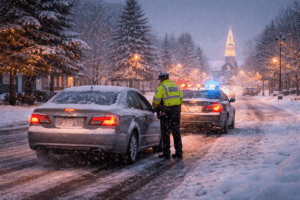
In New Hampshire, winter weather creates a unique set of challenges for drivers. Prosecutors will heavily rely on how the conditions on the road contributed to a driver’s behavior. Icy roads, snowstorms, and fog can all affect a driver’s judgment, leading to mistakes that might be seen as signs of impairment. However, these conditions do not necessarily indicate intoxication, and often, the driver’s actions are more of a result of the weather rather than alcohol consumption.
- Icy and Slippery Roads: When roads are icy, even the most experienced drivers may struggle to maintain control. Prosecutors might attempt to use skid marks, collisions, or erratic driving as evidence of impairment. However, an experienced defense attorney can demonstrate that these actions were simply a result of hazardous road conditions, not alcohol.
- Snow and Reduced Visibility: In a snowstorm, visibility is severely reduced, making it harder for drivers to spot hazards. A prosecutor may present evidence of a driver swerving or missing traffic signs as proof of poor decision-making, but this can often be explained by the lack of visibility caused by the weather.
- Freezing Temperatures: Freezing temperatures can impair a driver’s ability to control their vehicle. Prosecutors will consider whether the driver’s actions were caused by impaired driving or the icy conditions of the road.
Field Sobriety Tests: Winter Conditions and Their Impact
Field sobriety tests (FSTs) are one of the most common pieces of evidence in a DWI case, but these tests can be highly unreliable in winter weather. Snow and ice make it difficult for individuals to perform the necessary physical movements without slipping or falling. In many winter DWI cases, prosecutors will point to a failure to pass a field sobriety test as evidence of impairment, but these tests should be challenged in court, especially when road conditions played a role.
James J. Tenn, Jr.
Attorney

Mary Elizabeth Tenn
Attorney

John J. Tenn
Attorney
- The Walk-and-Turn Test: In the walk-and-turn test, the person must walk a certain number of steps in a straight line, turn around, and walk back. In winter conditions, snow and ice can make it nearly impossible to perform this test properly, leading to a false conclusion that a person is intoxicated when, in fact, the weather was the real culprit.
- One-Leg Stand Test: The one-leg stand test requires the person to balance on one foot for a period of time. In slippery conditions, this becomes incredibly difficult and can lead to failure even for sober individuals. Prosecutors may still try to use this failure as evidence against the defendant, which is why it’s important to understand how to challenge these results.
Breathalyzer Tests in Winter: Accuracy and Environmental Factors
Breathalyzer tests are often used in DWI cases to determine the level of alcohol in a driver’s system. However, during the winter months, several factors can affect the accuracy of these tests. In New Hampshire, it is crucial to understand how environmental conditions can alter the readings from a breathalyzer, and how to challenge these results.Millions in Verdicts & Settlements
The attorneys at Tenn And Tenn are ready to help you solve your legal problems and obtain results.
$9,000,000
Pedestrian Accident
$2,225,000
Motorcycle Collision
$2,224,000
CarAccident
- Temperature Effects on Breathalyzer Machines: Cold weather can affect the accuracy of breathalyzer machines, as the device measures the alcohol concentration in the air exhaled by the driver. Cold temperatures can cause condensation, which may interfere with the readings. Prosecutors will often present breathalyzer results as definitive evidence of intoxication, but defense attorneys can argue that the machine was not properly calibrated or that the environmental conditions skewed the results.
- Human Error and Calibration Issues: Breathalyzer tests are not foolproof. Officers must properly calibrate and maintain the equipment to ensure accurate results. If there’s a mistake in calibration or an issue with the equipment, the results can be challenged, making it difficult for the prosecutor to rely on the breathalyzer as evidence of impairment.
Building a Defense Against Winter DWI Charges in New Hampshire
As a defendant in a winter DWI case, you have several options for building a strong defense. Prosecutors often focus on the circumstances surrounding the weather, road conditions, and field sobriety tests, but these can be effectively challenged with the right legal strategy. At Tenn and Tenn, PA, we can help you defend against a winter DWI charge by emphasizing the following points:- Weather-Related Driving Errors: We will work to show that your driving behavior was a result of winter conditions rather than intoxication. This includes presenting evidence such as weather reports, accident reconstruction analysis, and expert testimony on how weather affects driving.
- Challenging Field Sobriety Test Results: We will challenge the reliability of field sobriety tests in winter conditions. This may include calling attention to how ice or snow prevented you from performing these tests accurately.
- Breathalyzer Test Issues: We will scrutinize the breathalyzer test procedure to ensure it was conducted properly and the machine was properly calibrated. If any errors were made, we will work to have the results dismissed.
Penalties for DWI Convictions in New Hampshire
Winter DWI charges can carry serious penalties. If convicted, you could face hefty fines, a suspended license, mandatory alcohol education programs, and even jail time. The severity of the penalties depends on factors such as the number of previous offenses, the level of impairment, and whether any aggravating factors were present, such as an accident causing injury or death.- First Offense DWI: A first-time offender can face fines, mandatory license suspension, and alcohol education programs. However, depending on the circumstances, some first-time offenders may be able to have their charges reduced or dismissed.
- Second or Subsequent Offenses: Repeat offenders can face harsher penalties, including longer license suspensions, larger fines, and mandatory alcohol treatment programs.
- Aggravated DWI: If a person is found with a BAC over .16% or if their actions led to an accident causing injury or death, they may face more severe penalties, including longer jail time and extended license suspension.