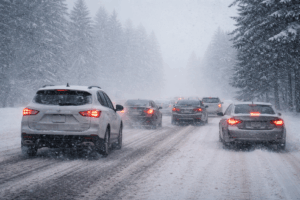
Bad weather is a common factor in multi-vehicle accidents, and it can complicate the process of determining fault. In New Hampshire, where weather conditions vary greatly, snow, rain, fog, and ice contribute to a significant number of accidents, especially during winter months. This guide explores how weather affects liability and fault in car crashes, offering insights for drivers and those involved in legal disputes.
How Weather Affects Fault in Multi-Vehicle Accidents
In New Hampshire, bad weather is often a significant factor when it comes to accidents involving multiple vehicles. Given the state’s diverse climate, drivers regularly face challenging conditions ranging from heavy snowfall in the winter to rain and fog in the spring and fall. These weather conditions can drastically reduce visibility, traction on the road, and reaction time, all of which contribute to accidents.When several vehicles are involved in a crash, determining who is at fault becomes more complex. In many cases, the weather is considered an “external factor,” meaning it is not directly caused by any single driver but may contribute to the crash. However, this does not necessarily absolve drivers of responsibility, as they are still expected to drive in a manner that accounts for these hazardous conditions. In New Hampshire, accidents caused by weather conditions can significantly complicate fault determination.
Challenges in Determining Fault in Weather-Related Crashes
Accidents involving multiple vehicles in bad weather can result in challenges when it comes to allocating blame. While the weather can undoubtedly play a role, there are numerous aspects that must be considered before a determination is made. For example, did the drivers maintain a safe speed given the road conditions? Were they following too closely? Were they using headlights, even if the weather was poor? These are all factors that influence the outcome of the case.
Reduced Visibility One of the most common weather-related issues in multi-vehicle accidents is reduced visibility. In heavy snowstorms or dense fog, drivers may struggle to see other vehicles, street signs, or potential hazards on the road. In such cases, rear-end collisions are frequent, as drivers may not notice stopped or slow-moving traffic until it is too late. Visibility is especially important during the early mornings and late evenings, when rain or fog can further obstruct sightlines.
Loss of Traction When roads become slick due to rain, ice, or snow, vehicles lose their ability to grip the surface, causing them to slide or skid. Even drivers who are accustomed to driving in these conditions may find it difficult to maintain control of their vehicles. The resulting collisions may not only involve multiple cars but also lead to injuries. Drivers who fail to adjust to slippery conditions may be found partially at fault for not reducing speed or maintaining a safe distance from other vehicles.
Slippery Roads and Skidding Heavy rain and snow accumulation create slippery roads, which can be a leading factor in multi-vehicle crashes. Drivers who fail to account for these conditions by maintaining adequate stopping distances or adjusting their speed appropriately may be found negligent in the event of an accident. Additionally, driving too fast for road conditions can make it difficult for drivers to stop quickly or maneuver around obstacles.
Delayed Reaction Time When driving in inclement weather, the reaction time needed to respond to sudden hazards increases significantly. Poor weather can reduce a driver’s ability to quickly brake, steer, or make other maneuvers necessary to avoid a collision. In some cases, delayed reactions can result in rear-end accidents, pile-ups, or collisions between vehicles trying to avoid the same hazard.
New Hampshire’s Legal Approach to Weather-Related Crashes
Under New Hampshire law, the presence of weather as a factor in an accident does not absolve drivers from liability. New Hampshire’s comparative fault system means that even if the weather is considered a factor, drivers must still exercise caution and adjust their driving habits accordingly. The law holds drivers responsible for accidents that occur due to negligence, even when weather conditions are poor.New Hampshire law recognizes that the weather is not always predictable, but it also holds that drivers should expect and prepare for changing conditions. For example, it would be unreasonable for a driver to claim they were not responsible for a crash during a snowstorm simply because they were unaware of the icy roads. Drivers are expected to adjust their speed, increase their following distance, and use headlights when conditions warrant them.
Weather and Fault Distribution in Multi-Vehicle Collisions
One of the most challenging aspects of multi-vehicle accidents caused by weather is the distribution of fault. In many cases, there is no clear-cut single cause; rather, several factors may have contributed to the incident. For example, one driver might have been speeding while another failed to stop in time, and both may be partially responsible for the crash. In New Hampshire, courts will typically look at the actions of each driver leading up to the crash and evaluate whether they acted in a manner that was appropriate given the weather conditions.Drivers who fail to reduce their speed when roads are icy, or who do not maintain a safe distance from other vehicles, may share responsibility for the accident. Even if the weather was a factor, negligent driving behavior can lead to liability. The court will assess whether drivers should have reasonably anticipated poor conditions and acted accordingly.
Gathering Evidence in Weather-Related Multi-Vehicle Accidents
When weather is a contributing factor, gathering evidence becomes even more crucial. For example, eyewitness testimony and dashcam footage can be essential in proving how each driver reacted in the moments leading up to the crash. Weather reports can also play a pivotal role, as they provide an objective record of the conditions at the time of the accident. In cases where weather-related factors contributed to an accident, it is essential for injured parties to collect as much evidence as possible.Additionally, police reports will often document the weather at the time of the crash. These reports can be used to establish whether any drivers were violating traffic laws or operating their vehicles negligently given the weather conditions.
Legal Recourse for Drivers Involved in Weather-Related Crashes
If you have been involved in a multi-vehicle crash caused by weather, seeking legal assistance is crucial to ensure that your rights are protected. In New Hampshire, personal injury attorneys are well-versed in weather-related accidents and can help you gather the evidence needed to support your case. At Tenn And Tenn, PA, our team of experienced attorneys can assist you in investigating the weather conditions, assessing the role each driver played in the accident, and ensuring that you receive fair compensation for any injuries sustained.Given the complexities of weather-related accidents, it is important to have legal representation that can navigate the intricacies of these cases. Tenn And Tenn, PA offers free consultations and can provide expert legal guidance to help you understand your options.Multi-vehicle accidents in New Hampshire caused by bad weather can lead to complex legal issues, especially when determining fault. However, while weather conditions are a significant factor, drivers are still held accountable for their actions. In these cases, it is vital to work with an experienced personal injury attorney to ensure you are not unfairly held responsible and to maximize your chances of securing fair compensation.If you’ve been involved in a weather-related multi-vehicle crash, reach out to Tenn And Tenn, PA for a free consultation. Our team is here to help guide you through the legal process and fight for your rights.