
Yes. A vehicle search can affect a New Hampshire DWI case when police discover evidence that prosecutors seek to use to prove impairment or related offenses. If officers conducted a search without a valid legal basis, your attorney may be able to challenge the evidence through a motion to suppress. The outcome depends on why the vehicle was stopped, how the search occurred, and what other evidence remains.
New Hampshire drivers have protections under Part I, Article 19 of the state constitution, the Fourth Amendment, and RSA 595-A:10, which governs consent-based motor vehicle searches. A DWI arrest does not automatically authorize police to search every part of your vehicle.
Why Vehicle Searches Matter in a New Hampshire DWI Investigation
A traffic stop for speeding, lane positioning, or a lighting violation can lead to an impaired-driving investigation. Police may observe driving behavior, speak with you, conduct roadside assessments, and seek chemical testing. A vehicle search may also uncover alcohol containers, medication, or suspected controlled drugs.
Under RSA 265-A:2, New Hampshire prohibits driving or attempting to drive under the influence of intoxicating liquor, qualifying drugs, or other impairing substances, and sets applicable alcohol concentration limits. A bottle or prescription container inside a vehicle does not, by itself, establish the elements of DWI. Prosecutors must connect admissible evidence to the charged conduct.
Your defense review should address both the relevance of an item and whether police had lawful authority to obtain it.

James J. Tenn, Jr.
Attorney

Mary Elizabeth Tenn
Attorney

John J. Tenn
Attorney
When Can Police Search Your Vehicle in New Hampshire?
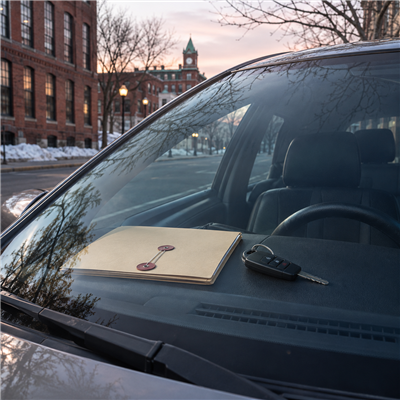
Police generally need a warrant or a recognized exception to the warrant requirement. The legal justification must fit the circumstances and the scope of the search. The fact that an officer suspects DWI does not create unlimited permission to search the passenger compartment, trunk, or personal belongings.
Consent Searches Under RSA 595-A:10
An officer may ask you for permission to search your motor vehicle. When the search relies on consent under RSA 595-A:10, the officer must expressly tell the operator all of the following:
- You have the right to refuse consent to a search.
- Your refusal does not, on its own, establish probable cause to arrest you or reasonable suspicion to detain you.
- You cannot be charged with a crime or violation simply for refusing consent.
- Your refusal cannot be used as a reason to detain you further.
If you refuse, the officer must stop further questioning about consent to search. If you agree, the officer must document consent through a signed consent form providing the required notice or a contemporaneous video-and-sound recording. The statute requires that documentation to be retained until the resulting criminal charge is fully resolved.
RSA 595-A:10 provides an exclusion remedy for evidence obtained when an officer violates the statute. Whether the remedy applies in your case depends on the facts and the basis for the challenged search.
Key point: You may refuse a request for consent to search your vehicle. That refusal does not eliminate a separate, lawful basis for a search if one exists.
Probable Cause, Plain View, and Other Limited Exceptions
New Hampshire protects vehicle privacy more narrowly than the broad federal automobile-search exception might suggest. In State v. Cora, the New Hampshire Supreme Court recognized a limited exception when officers lawfully stop a vehicle in transit and have probable cause to believe a plainly visible item inside is contraband. The decision did not adopt a general rule allowing officers to search every area of a vehicle whenever they have probable cause.
Other recognized legal justifications may include a properly limited search incident to arrest, a protective search justified by officer-safety concerns, or circumstances involving an emergency. Each justification has separate limits. A search may be unlawful if officers exceed the authority that the particular exception provides.
Inventory Searches After a DWI Arrest
After an arrest, police may need to tow or lawfully impound a vehicle. An inventory search may be permissible when officers follow standardized procedures for documenting property and protecting safety. Such a search must serve a legitimate administrative purpose rather than acting as an investigative shortcut.
If your car was safely parked, an authorized person was available to take custody, or police departed from their usual inventory procedures, your attorney may examine whether impoundment and the ensuing search were justified. These facts do not automatically invalidate an inventory search, but they can matter.
What Can Evidence Found in a Vehicle Prove?
Prosecutors might point to an open container, a medication bottle, or suspected drugs as support for their account of impaired driving. The evidentiary value of an item depends on context, including who possessed it, where it was located, whether it was open or sealed, and whether it has a meaningful connection to your condition when driving.
Consider a hypothetical traffic stop in Manchester, New Hampshire. An officer observes a moving violation, suspects alcohol impairment, and later finds a beverage container in the vehicle. The container may become part of the evidence, but questions remain about the search authority, the contents, ownership, and any connection to impairment. The discovery alone does not decide the DWI charge.
See What Our Clients Are Saying About Us

Attorney John Tenn and his entire team are amazing people! If you need a lawyer, he is the man to call! He handled my case in a professional matter and took the stress out of it all.
Mallory C.

The whole team were very professional and responsive. My case was effectively handled with good communication during the process. Very satisfied with the outcome. Highly recommend!
A. McMillan
Can an Unlawful Vehicle Search Lead to Suppression of Evidence?
Yes. Your defense attorney may file a motion to suppress evidence obtained through an unconstitutional search or a violation of an applicable statute. The court reviews the facts, the legal grounds asserted by police, the scope of the search, and the connection between any unlawful conduct and the evidence at issue.
For example, an officer might obtain apparent consent without giving the notices required by RSA 595-A:10. If the search depended on that consent, the statutory remedy could affect whether the resulting evidence may be admitted.
Suppression is not the same as an automatic dismissal. Even if the court excludes an item discovered in the vehicle, prosecutors may still rely on lawful observations, witness statements, video recordings, or admissible chemical test evidence. In some cases, the remaining evidence may be insufficient; in others, the prosecution may continue.
Why the Initial Traffic Stop and Its Duration Matter
A search challenge may begin with the reason police stopped you. Officers generally need a lawful basis, such as an observed traffic violation or reasonable suspicion of criminal activity, for an investigatory traffic stop. The duration and scope of the stop must also remain legally justified.
If officers prolong a completed traffic stop to investigate an unrelated matter without an adequate legal basis, the continued detention may be challenged. When a later search results from an unlawful detention, your attorney can examine whether the discovered evidence should be excluded.
For practical information about roadside encounters, read: What to do if youre pulled over for drunk driving
Is Refusing a Vehicle Search the Same as Refusing a Breath or Blood Test?
No. Refusing consent to a vehicle search is legally distinct from refusing certain requested physical or chemical tests under New Hampshire implied-consent law. RSA 595-A:10 concerns informed consent to motor vehicle searches. RSA 265-A:4 and RSA 265-A:14 address testing in the impaired-driving context.
As of November 17, 2026, RSA 265-A:14 generally provides a 180-day license suspension for a first qualifying refusal without prior DWI-related convictions, with a longer period in specified repeat situations. A statutory amendment scheduled for January 1, 2027 changes these periods. The exact consequences depend on the law applicable to the incident and the driver’s record.
Your decision about vehicle-search consent should not be confused with a decision about post-arrest testing. An attorney can explain which warnings, deadlines, and administrative procedures apply to your circumstances.
Learn more about license-related proceedings: Administrative license suspension in new hampshire
What Happens If Police Search Your Vehicle After an Arrest?
Following a DWI arrest, the vehicle might remain lawfully parked, be released to an authorized driver, or be towed. Police may claim authority to search based on the circumstances of arrest, safety concerns, impoundment procedures, or another recognized exception. An arrest, standing alone, does not give officers unlimited authority to examine every compartment or personal item.
Your attorney may review towing records, department policies, officer reports, body-camera footage, and inventory documentation to evaluate the search. The timing of each decision can be as important as the items discovered.








How a DWI Defense Attorney Evaluates a Vehicle Search
A careful defense assessment compares the officer’s stated justification with what the evidence actually shows. Depending on the case, an attorney may examine:
- The initial reason for stopping your vehicle and the length of the detention.
- Dash-camera and body-camera recordings, including requests for consent.
- Any signed consent form or video-and-sound record required by RSA 595-A:10.
- Where each item was found and whether officers exceeded the permitted scope.
- Arrest timing, towing decisions, and inventory policies.
- Whether the prosecution has admissible evidence independent of the search.
- The grounds and deadlines for any suppression motion or administrative license challenge.
The purpose is to identify fact-specific defenses and assess the role that vehicle-search evidence may play in the prosecution.
What Outcomes Are Possible When Search Evidence Is Challenged?
A successful challenge may keep particular items or related testimony out of the case. It may change plea discussions, narrow the prosecution’s evidence, or support dismissal when too little admissible proof remains. The result is never automatic, and the available remedy depends on the particular violation.
Suppose police discover suspected drugs during a disputed search after a stop in Nashua, New Hampshire. If the court suppresses those items, prosecutors must assess the DWI allegation using the evidence they can still lawfully present. A valid breath test or credible observations, if available, may remain part of that assessment.
For background on potential consequences of a conviction, see: New hampshire DUI DWI first offense penalties
What Should You Do If Police Searched Your Vehicle During a DWI Stop?
If your vehicle was searched in connection with a New Hampshire DWI investigation, preserve what you can remember and the records that may help explain the search.
- Write down the location, approximate time, and reason given for the stop.
- Record the words used when officers requested consent and how you responded.
- Save citations, arrest paperwork, towing receipts, and license notices.
- Identify witnesses and preserve any relevant recordings or messages.
- Seek legal advice promptly about criminal-court and administrative deadlines.
Avoid reconstructing details by guessing. A clear account of what you remember can help your attorney compare your recollection with police reports and recordings.
Millions in Verdicts & Settlements
The attorneys at Tenn And Tenn are ready to help you solve your legal problems and obtain results.
$9,000,000
Pedestrian Accident
$2,225,000
Motorcycle Collision
$2,224,000
CarAccident
Speak With a New Hampshire DWI Attorney About Your Vehicle Search
If police searched your vehicle during a DWI stop or after an arrest, a review of the stop, consent process, and search records may identify issues that affect your defense. Tenn And Tenn, PA provides personalized representation in DWI and criminal defense matters from its Manchester, New Hampshire office, serving clients throughout the state and nearby areas.
Contact the firm to schedule a consultation and discuss the circumstances of your case. The firm’s attorneys can review the available evidence, explain your options, and help you make informed decisions.
You can also review guidance on selecting legal counsel: Choosing a new hampshire DWI lawyer
This article provides general information, not legal advice. Its publication does not create an attorney-client relationship. Consult a qualified attorney about your specific circumstances.


 |

 |