
Yes. Police can arrest you for DWI in New Hampshire even if you never receive a breath-test result at or above 0.08. A failed roadside breath test is not required before an arrest. New Hampshire law allows a DWI charge to be based on alleged impairment from alcohol, controlled drugs, prescription medication, over-the-counter medication, or another chemical substance that allegedly affects your ability to drive. The law also separately prohibits driving or attempting to drive with an alcohol concentration at or above the statutory limit.
At the arrest stage, the main question is whether the officer had probable cause to believe that you were driving or attempting to drive while impaired or while over the applicable alcohol-concentration limit. Police may rely on driving behavior, statements, physical observations, field sobriety testing, video, crash evidence, a preliminary breath test if one is given, and other facts known to the officer.
Tenn And Tenn, PA represents people facing DWI allegations in Manchester and throughout New Hampshire. A defense review can examine whether the stop was lawful, whether probable cause supported the arrest, how roadside tests were administered, what the video shows, and whether the State can prove the charge.
A breath-test number is only one type of evidence. Police may make an arrest based on the totality of the circumstances if they believe probable cause exists.





A Breath Test Is Not Required Before a New Hampshire DWI Arrest 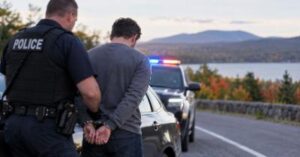
Many drivers assume that police must first obtain a breath reading of 0.08 or higher before making a DWI arrest. New Hampshire law does not require that result in every DWI case.
RSA 265-A:2 creates separate ways the State may try to prove DWI. One theory focuses on whether you were under the influence of intoxicating liquor, a controlled drug, prescription drug, over-the-counter drug, or another chemical substance that impaired your ability to drive. A separate theory focuses on whether your alcohol concentration met or exceeded the statutory limit.
Because impairment and alcohol concentration are separate legal theories, an officer may arrest you without a failed breath test if the officer believes the other facts establish probable cause. The State may later try to prove impairment through observations, statements, field sobriety evidence, video, witness testimony, chemical testing, or other admissible evidence.
For a broader explanation of the post-arrest process, see:
https://www.tennandtenn.com/after-a-dwi-arrest-in-new-hampshire/
What Can Police Rely On Instead of a Failed Breath Test?
A DWI investigation often begins with driving behavior, a traffic violation, a crash, or another encounter with police. The officer may then consider several facts when deciding whether probable cause exists.
Evidence may include:
- Alleged weaving, speeding, braking, lane violations, or a collision
- The odor of alcohol or another substance
- Red or watery eyes
- Speech the officer describes as slurred
- Difficulty locating documents or following instructions
- Statements about alcohol, cannabis, prescription medication, or other substances
- Performance on field sobriety tests
- A preliminary roadside breath test, if one is administered
- Open containers or other items observed in the vehicle
- Body-camera or cruiser-camera footage
- Witness statements
- Crash-scene evidence
No single fact automatically proves DWI. A defense review may compare the officer’s report with video, audio, dispatch records, witness accounts, medical information, testing records, and the sequence of events leading to the arrest.
For more information about roadside exercises, see:
https://www.tennandtenn.com/new-hampshire-field-sobriety-tests/
James J. Tenn, Jr. Mary Elizabeth Tenn John J. Tenn
Attorney
Attorney
Attorney
What Is the Difference Between a Preliminary Breath Test and the Official Chemical Test?
A preliminary breath test, often called a PBT, is a roadside screening test. Under RSA 265-A:15, a certified officer who has reasonable grounds to suspect impaired driving may request a PBT before making an arrest.
Refusing a PBT is not itself a violation of New Hampshire’s DWI chapter. Evidence of that refusal generally is not admissible in a DWI prosecution except for the limited purpose of deciding whether the officer had probable cause to arrest you.
The official post-arrest chemical-testing process is different. After an arrest, New Hampshire’s implied-consent law may apply to breath, blood, or urine testing requested under RSA 265-A:4. Those tests involve separate statutory procedures and can create separate license consequences when a qualifying refusal occurs.
This means you can be arrested before any official evidentiary breath test is administered. In many cases, the officer makes the arrest decision first and requests the official test afterward.
More information about the roadside PBT is available here:
https://www.tennandtenn.com/the-preliminary-breath-test-pbt-in-new-hampshire/
Can Police Arrest You If You Refuse the Roadside Breath Test?
Yes. Refusing a roadside PBT does not prevent an arrest.
The officer may continue the investigation and rely on driving observations, statements, physical observations, field sobriety tests, video, crash evidence, witness information, and other facts. The arrest decision does not depend on one required piece of evidence.
A PBT refusal also does not establish that probable cause existed. The circumstances known to the officer at the time of the arrest can later be reviewed to determine whether the arrest was legally supported.
Millions in Verdicts & Settlements The attorneys at Tenn And Tenn are ready to help you solve your legal problems and obtain results. Pedestrian Accident Motorcycle Collision CarAccident$9,000,000
$2,225,000
$2,224,000
Can You Be Charged With DWI If a Later Breath Test Is Below 0.08?
Potentially, yes. A result below 0.08 does not automatically end a New Hampshire DWI case because the State may pursue an impairment-based theory.
New Hampshire law gives different evidentiary treatment to different alcohol-concentration ranges. Under RSA 265-A:11:
- An alcohol concentration of 0.03 or less is prima facie evidence that you were not under the influence of intoxicating liquor.
- A result above 0.03 but below 0.08 is relevant evidence, but it does not receive prima facie effect for deciding whether you were under the influence of intoxicating liquor.
- A result of 0.08 or more is prima facie evidence that you were under the influence of intoxicating liquor and may also support the separate excess-alcohol-concentration theory when the other required elements are present.
A result below 0.08 does not prove that another substance impaired you. Police may investigate possible drug or medication impairment when the circumstances support that investigation, but the State still must prove the charged offense with admissible evidence.
Why Field Sobriety Test Evidence Can Matter Without a Failed Breath Test
When there is no failed breath test, field sobriety evidence may become a larger part of the officer’s probable cause decision and the State’s later case.
Standardized field sobriety tests are intended to provide officers with observable information about areas such as balance, coordination, divided attention, and eye movement. The value of that evidence can depend on how the tests were explained, administered, scored, and recorded.
A defense review may consider:
- Whether the officer gave the required instructions
- Whether the officer demonstrated the test
- Whether the testing surface was level and reasonably safe
- Lighting, weather, and traffic conditions
- Footwear
- Injuries or physical limitations
- Fatigue, stress, or anxiety
- Whether you reported a medical issue
- Whether the officer’s written scoring matches the available video
- Whether interruptions or environmental conditions affected the testing
These details do not automatically invalidate field sobriety evidence. They may affect how the evidence is interpreted and how much weight it receives.
What Happens If You Refuse the Official Post-Arrest Chemical Test?
Refusing an official post-arrest chemical test is different from declining a roadside PBT.
Under New Hampshire’s implied-consent law, a qualifying refusal can trigger an Administrative License Suspension. Evidence of a refusal under RSA 265-A:4 may also be admissible in a civil or criminal proceeding arising from the alleged impaired-driving conduct.
As of September 4, 2026, RSA 265-A:14 provides a 180-day suspension for a first refusal when there is no prior DWI or aggravated DWI conviction. Senate Bill 620, approved on April 20, 2026, changes the first-refusal period to nine months and changes certain subsequent-refusal or prior-conviction periods from two years to three years. Those changes take effect on January 1, 2027. The date of the alleged offense and your prior record can affect which rule applies.
The criminal DWI case and the administrative license process are separate proceedings. You may need to address both at the same time, and the deadlines in the administrative process can be shorter than the timeline in the criminal case.
For more information about breath-testing issues, see:
https://www.tennandtenn.com/common-mistakes-made-during-dui-breath-testing/
What Evidence Should Be Reviewed After an Arrest Without a Failed Breath Test?
When there is no failed breath result, the facts surrounding the stop and arrest can become especially significant.
A New Hampshire DWI lawyer may review:
- Police reports and supplemental reports
- Body-camera and cruiser-camera recordings
- Dispatch records
- 911 calls
- Witness statements
- Field sobriety test instructions and scoring
- Preliminary breath test records, if any
- Post-arrest breath, blood, or urine testing records
- Medical information that may explain physical symptoms or testing performance
- Photographs of the road, crash scene, or testing area
- Receipts, messages, location records, or other timeline evidence
- Whether police had a lawful basis for the stop or encounter
- Whether probable cause supported the arrest
- Whether testing procedures and statutory requirements were followed
The purpose of that review is to determine what the evidence actually shows, whether the officer’s conclusions are supported, and whether legal or procedural issues may affect the case.
An Arrest Is Not the Same as a Conviction
A DWI arrest means that an officer believed probable cause existed. It does not mean that the State has proved the charge.
In a criminal case, the State must prove the charged offense beyond a reasonable doubt. Depending on the facts, the defense may challenge the basis for the stop, probable cause for arrest, field sobriety evidence, statements, testing procedures, video interpretation, witness testimony, or other evidence.
A case without a failed breath test may still be prosecuted. The absence of a high breath result can also make the remaining evidence more significant because the State may need to rely more heavily on observations and other proof of impairment.
Speak With a New Hampshire DWI Lawyer
If you were arrested for DWI without a failed breath test, the absence of a 0.08 or higher breath result does not automatically end the case, and the arrest does not establish guilt. The traffic stop, officer observations, field sobriety testing, video, statements, chemical testing, and probable cause decision should be reviewed together.
Tenn And Tenn, PA represents people facing DWI charges in Manchester and throughout New Hampshire. The firm can review the arrest, testing issues, license paperwork, and available evidence and explain the legal options that may apply to your situation.
Call 603-614-5055 to discuss your situation with Tenn And Tenn, PA.
You can also contact the firm here:
https://www.tennandtenn.com/contact-us/
This article is for informational purposes only and is not legal advice. Reading this article does not create an attorney-client relationship. Consult an attorney about your specific situation.