
The Hidden Dangers of Early-Season Ice 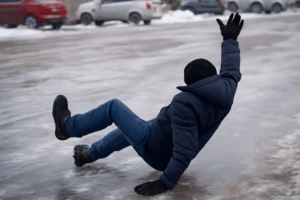
The transition from autumn to winter often brings the first freeze, but it also marks a season where ice becomes an increasingly dangerous issue. Many people are familiar with the dangers of snow and slush, but the slick, often invisible nature of ice makes it far more dangerous. Ice is much harder to detect, especially in the early stages of winter when it’s forming in parking lots, walkways, and driveways before property owners have a chance to treat it.
This first freeze often catches property owners by surprise, leaving untreated ice patches in high-traffic areas, including commercial parking lots, driveways, and sidewalks. These conditions are hazardous, and slipping on these hidden hazards can lead to serious injuries. With temperatures often dropping below freezing at night, you may find yourself walking on a thin layer of ice that wasn’t there just a few hours ago.


James J. Tenn, Jr.
Attorney

Mary Elizabeth Tenn
Attorney

John J. Tenn
Attorney
Working hard to obtain the best results possible for our clients and fighting to protect their rights.
Understanding Property Owners’ Duty of Care in New Hampshire
When you fall on ice in a parking lot or other public space, understanding the responsibility of the property owner is key. Under New Hampshire law, property owners have a duty to ensure their premises are reasonably safe for guests and customers. This includes maintaining safe walkways during the winter months. The property owner is expected to clear snow and ice from parking lots and sidewalks within a reasonable amount of time after a storm or freezing temperatures. In practical terms, this means that property owners must take steps to prevent accidents by salting, sanding, or otherwise addressing icy conditions before they cause harm. However, there is an exception: if a property owner had no reasonable opportunity to clear the ice due to sudden or extreme weather conditions, they may not be held responsible for a slip-and-fall accident. For instance, if a sudden overnight freeze occurs and a property owner could not reasonably have known of the icy conditions, liability may not apply.The Role of Commercial and Residential Property Owners
While commercial property owners like those managing shopping malls, grocery stores, or office buildings are generally required to keep their parking lots clear of ice, residential property owners have different responsibilities. If you slip in a private residential parking lot or on someone’s driveway, the law treats the situation differently than it would for a commercial property. For commercial properties, the responsibility is clear: the owners must take reasonable steps to clear icy areas as quickly as possible. However, if you fall in a private parking area or on someone’s personal property, it is more challenging to determine whether or not they have violated their duty of care. New Hampshire law generally requires property owners to act within a reasonable time frame to prevent harm. But private property owners may not be held to the same stringent standards as those who run businesses or public spaces.Falling on Ice: Common Injuries and Long-Term Impacts
When people fall on icy surfaces, the severity of their injuries can range from minor bruises to serious fractures or head injuries. The most common injuries from falls on ice include:- Sprains and strains: Often caused by a sudden twist or fall, strains and sprains are painful and can require long recovery times.
- Fractures and broken bones: Many slip-and-fall accidents result in broken arms, legs, wrists, or ankles. These injuries can lead to long-term pain, expensive medical bills, and missed work.
- Head injuries and concussions: Falling and hitting your head on a hard surface can result in concussions, traumatic brain injuries (TBI), or even permanent neurological damage. These injuries are especially dangerous and require immediate medical attention.
- Spinal cord injuries: In more severe cases, falls on ice can lead to spinal cord damage, which can result in long-term disability or paralysis.
Who Is Liable for Ice-related Injuries?
When you slip and fall due to icy conditions, the primary question is: who is responsible for the accident? The answer depends on several factors, including:- The location of the fall: Was the fall on a commercial property, like a store parking lot? Or was it on private residential property?
- The property owner’s knowledge: Did the property owner know or should they have known about the ice? Did they have time to clear it, or were the conditions such that they were unable to do so?
- The cause of the fall: Was the fall due to a hazardous condition on the property, or was it caused by something else, like negligence on the part of the pedestrian?
Comparative Negligence: What Happens If You Are Partly at Fault?
In New Hampshire, the doctrine of comparative negligence comes into play when an accident occurs. This means that if you are partially at fault for your own injury, your compensation may be reduced by the percentage of fault attributed to you. For example, if you were running or distracted when you fell, a judge or jury may decide that your actions contributed to the accident. In this case, your compensation would be reduced according to your percentage of fault. However, this doesn’t mean you can’t file a claim for your injuries. If a property owner’s negligence caused or contributed to the fall, you may still be entitled to compensation, even if you were partially at fault.How to Document Your Injury After a Fall on Ice
If you are injured after slipping on ice, documentation is key. In order to prove that the property owner was negligent, you must gather evidence about the fall. Here are some things you should do:- Take pictures: If you can, take pictures of the area where you fell, including any visible ice or hazardous conditions. Make sure to capture the surrounding area and the time of day.
- Report the incident: If the accident occurred in a public or commercial area, report the incident to the property owner or manager. This can help ensure that your case is taken seriously.
- Seek medical attention: Get medical attention immediately, even if your injuries seem minor. Documentation of your injuries and treatment is essential for filing a claim.