
Cold rain, wet leaves, and slick pavement can contribute to motorcycle crashes in New Hampshire, but bad weather does not automatically excuse another driver’s negligence. If a driver follows too closely, fails to yield, or makes an unsafe turn, an injured rider may be able to pursue compensation. New Hampshire generally allows a rider to recover damages when the rider’s share of fault does not exceed the combined fault of the defendants. Most personal injury lawsuits must be filed within three years, although exceptions can apply.
If you were hurt in Manchester, Bedford, Concord, or another New Hampshire community, document the conditions, seek medical care, and consider speaking with a New Hampshire motorcycle accident lawyer before accepting an insurance settlement.
Why Cold Rain Makes New Hampshire Motorcycle Riding Riskier
Motorcycles depend on tire traction for balance, braking, and cornering. During October and November, falling temperatures, rain, early darkness, and fallen leaves can create a changing mix of hazards on roads throughout southern New Hampshire and the Lakes Region.
Cold pavement and damp surfaces can reduce available grip. Rain also affects visibility and increases the time drivers may need to stop. Riders may encounter different conditions within one trip, especially on shaded roads, bridges, curves, and intersections.
Common Motorcycle Hazards on Wet Roads
- Wet leaves and debris: Rain-soaked leaves can reduce grip and conceal gravel, potholes, or uneven pavement.
- Cold, wet pavement: Tires can respond differently in cool temperatures, particularly during sudden braking or cornering.
- Standing water: Sufficient water at speed can cause hydroplaning, depending on tire condition, tread, water depth, speed, and pavement.
- Painted lines and metal covers: Road markings, utility plates, and manhole covers can become slippery when wet.
- Poor visibility: Rain, mist, glare, and reduced daylight can make motorcycles harder for drivers to see.
Practical takeaway: Weather can explain how a crash happened, but liability also depends on whether each road user acted reasonably under the conditions.
https://www.tennandtenn.com/new-hampshire-motorcycle-safety-tips/

James J. Tenn, Jr.
Attorney

Mary Elizabeth Tenn
Attorney

John J. Tenn
Attorney
How Rain and Driver Negligence Lead to Motorcycle Crashes
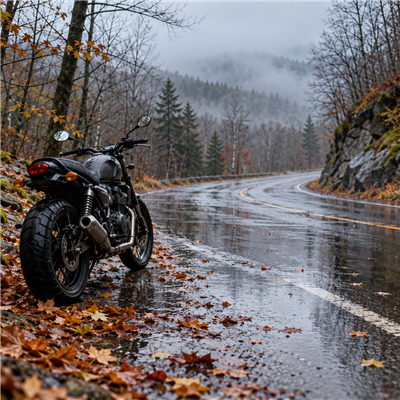
Wet roads become particularly dangerous when motorists fail to adapt. A driver traveling at the posted speed limit may still be driving too fast for conditions if rain, standing water, or limited visibility makes that speed unsafe.
Common scenarios that may support a motorcycle accident claim include:
- A motorist follows a motorcycle too closely and cannot stop in time.
- A driver turns left across an approaching rider’s path.
- A vehicle changes lanes without checking mirrors or blind spots.
- A driver enters an intersection without yielding.
- A distracted or impaired driver fails to respond to traffic.
Imagine that a driver turns left in front of a motorcyclist at a Manchester intersection during heavy rain. The rider brakes and falls while attempting to avoid a collision. Even if the motorcycle never touches the vehicle, the turning driver’s conduct may be relevant to liability. Investigators would examine the right of way, speed, visibility, reaction time, and other evidence.
Who May Be Liable for a Wet-Weather Motorcycle Accident?
A negligent driver may be responsible if a failure to use reasonable care contributed to the crash. In some situations, an investigation may also consider a defective motorcycle component, unsafe road maintenance, or another involved party.
Claims involving public roads and government entities require particular care. Governmental immunity, statutory limits, notice procedures, and different deadlines may affect whether a claim can proceed. A dangerous road surface alone does not establish that a government entity is liable.
Photographs, witness accounts, dashcam footage, police observations, vehicle inspections, and weather records can help establish what happened and why.
How New Hampshire Comparative Fault Affects Compensation
Under New Hampshire RSA 507:7-d, a rider generally may recover if the rider’s fault is not greater than the fault of the defendant or defendants combined. Recoverable damages are reduced in proportion to the fault assigned to the rider.
For example, suppose the total damages are $100,000 and a rider is assigned 20% fault while another driver is assigned 80%. The rider’s recovery would generally be reduced to $80,000. This is an illustration, not a prediction of any case outcome.
Insurers may argue that a motorcyclist should have reduced speed or avoided certain conditions. Those arguments must be evaluated against the evidence. Riding in cold or rainy weather does not, by itself, establish negligence.
https://gc.nh.gov/rsa/html/LII/507/507-7-d.htm
Millions in Verdicts & Settlements
The attorneys at Tenn And Tenn are ready to help you solve your legal problems and obtain results.
$9,000,000
Pedestrian Accident
$2,225,000
Motorcycle Collision
$2,224,000
CarAccident
Common Injuries in Rain-Related Motorcycle Crashes
Motorcyclists have less protection from impact than occupants of enclosed vehicles. A collision or loss of control can cause injuries that require immediate or ongoing care.
- Road rash and other skin injuries
- Fractures, shoulder injuries, and knee damage
- Neck, back, and spinal injuries
- Concussions and traumatic brain injuries
- Soft-tissue injuries and lasting mobility limitations
Some symptoms appear after the initial collision. Prompt medical attention can identify injuries, support recovery, and create records of the treatment received.
https://www.tennandtenn.com/understanding-more-about-new-hampshire-motorcycle-accidents/
What to Do After a Motorcycle Crash on a Rain-Slicked Road
Your health and safety come first. Once you are out of immediate danger, take the following steps when your condition permits:
- Seek medical care. Seek emergency assistance when needed and obtain an appropriate evaluation, even if symptoms initially seem minor.
- Report the crash. Give law enforcement an accurate account without guessing about causes.
- Document the scene. Photograph road surfaces, leaves, standing water, markings, vehicle damage, and visible injuries if doing so is safe.
- Identify witnesses. Request contact details from people who saw the vehicles before the crash.
- Preserve records. Keep medical bills, repair estimates, lost-wage documents, and correspondence with insurers.
- Discuss the claim with counsel. Consider legal advice before signing a broad release or agreeing to a final settlement.
Rain-related evidence may disappear as roads dry and traffic conditions change. Early documentation can be particularly valuable.
See What Our Clients Are Saying About Us

Attorney John Tenn and his entire team are amazing people! If you need a lawyer, he is the man to call! He handled my case in a professional matter and took the stress out of it all.
Mallory C.

The whole team were very professional and responsive. My case was effectively handled with good communication during the process. Very satisfied with the outcome. Highly recommend!
A. McMillan
What Compensation May Be Available?
If another party’s negligence caused your injuries, compensation may address both financial losses and the personal effects of the crash. The categories depend on the facts and applicable law.
- Emergency treatment, hospitalization, rehabilitation, and reasonable future medical costs
- Lost wages and reduced earning capacity
- Motorcycle repair or replacement costs
- Physical pain, emotional suffering, and loss of enjoyment of life
The value and availability of damages depend on documented injuries, causation, comparative fault, available insurance, and any applicable legal limits or defenses. An attorney can also review potential uninsured or underinsured motorist coverage.
https://www.tennandtenn.com/new-hampshire-personal-injury-lawyers/
How Long Do You Have to File a New Hampshire Motorcycle Accident Lawsuit?
New Hampshire RSA 508:4 generally establishes a three-year deadline for personal injury actions, measured from the act or omission at issue. The statute includes a discovery provision for certain injuries that were not reasonably discoverable earlier. Special claim types and defendants may be subject to different rules.
Speak with an attorney promptly to identify the applicable deadline. Witness memories can fade, recordings can be deleted, and physical evidence can be lost before a filing deadline arrives.
https://gc.nh.gov/rsa/html/LII/508/508-4.htm
Frequently Asked Questions About Rain-Related Motorcycle Accidents
Can I recover compensation if rain contributed to my motorcycle accident?
Possibly. Rain does not prevent a claim when another party’s negligent conduct contributed to the collision. Your ability to recover depends on the evidence and New Hampshire comparative fault rules.
Does riding a motorcycle in cold weather automatically make me negligent?
No. Liability depends on reasonable conduct under the actual conditions, rather than the weather alone.
Can I pursue a claim if I slid while avoiding another car?
Potentially. A negligent maneuver by another driver may contribute to a crash even without physical contact. Witness accounts, video, and physical evidence may help show what happened.
What if an insurer says I was partly responsible?
A fault allegation does not settle the issue. New Hampshire law allows a proportionately reduced recovery in qualifying cases when a rider shares some responsibility.
Are motorcycle injury lawsuits subject to the same deadlines as car crashes?
Most negligence-based injury claims fall under the general three-year rule, but the precise deadline may differ based on the claim and defendant.








Speak With a New Hampshire Motorcycle Accident Lawyer
If you were injured on a cold, rain-slicked road, Tenn And Tenn, PA can review the circumstances, explain potential sources of compensation, and discuss the evidence needed to evaluate your claim. The firm serves riders in Manchester, Bedford, Concord, and communities throughout New Hampshire.
Contact Tenn And Tenn, PA to discuss your motorcycle accident. The firm’s Manchester office is located at 16 High Street, Suite 3, Manchester, NH 03101.
https://www.tennandtenn.com/contact-us/
This article provides general information, not legal advice. Reading it does not create an attorney-client relationship. Case results depend on individual facts.


 |

 |