
The first snowfall in New Hampshire can create slippery roads and reduced visibility, contributing to rear-end collisions, intersection crashes, and multi-vehicle accidents. Drivers remain responsible for adjusting their speed and following distance to road conditions, even when snow or ice contributes to a collision. New Hampshire’s comparative fault law, RSA 507:7-d, determines how shared responsibility can affect compensation, while insurance coverage influences how accident victims recover their losses. Understanding these rules can help injured motorists protect their rights, document their injuries, and pursue appropriate insurance claims.
After a first-snow crash, you can protect your claim by reporting the collision, documenting changing road conditions, seeking appropriate medical care, and reviewing available insurance coverage. Tenn And Tenn, PA assists people injured in New Hampshire motor vehicle accidents.
Why the First Snowfall Creates Dangerous Driving Conditions
New Hampshire motorists are familiar with winter weather, but the first snowfall of the season can create unexpected challenges.
During the transition from fall to winter, road temperatures can fall below freezing while the air remains relatively mild. Moisture may freeze on bridges, overpasses, and shaded roads before drivers recognize the danger.
Early snowfall can also expose drivers who have not prepared their vehicles for winter conditions.
Common factors contributing to first-snow car accidents include:
- Reduced traction: Snow, slush, and ice make stopping and steering more difficult.
- Excessive speed for conditions: A speed that is legal on dry pavement may be unsafe during snowfall.
- Following too closely: Drivers may underestimate the distance needed to stop.
- Poor visibility: Falling snow, fogged windows, and dirty headlights can obscure hazards.
- Unprepared vehicles: Worn tires, ineffective wipers, and mechanical problems can increase accident risks.
These conditions affect major routes such as Interstate 93 near Manchester, the Everett Turnpike around Nashua, and local roads throughout Bedford, Concord, and surrounding communities.
Winter weather may help explain why an accident happened, but it does not automatically excuse negligent driving.
Who Is Responsible for a Car Accident During the First Snow?
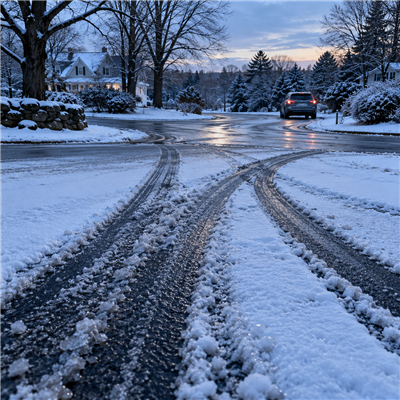
One of the most common questions after a winter collision is whether the driver who lost control can be held responsible when ice or snow caused the vehicle to slide.
A driver may still be negligent even when winter weather contributes to an accident.
New Hampshire RSA 265:60 establishes speed restrictions, including the requirement to operate at a speed that is reasonable and prudent under existing conditions.
A motorist traveling below the posted speed limit may still be driving too fast when visibility is limited or pavement is icy.
For example, consider a driver approaching a traffic signal in Manchester during the season’s first snowstorm. The driver fails to leave sufficient stopping distance, slides through the intersection, and strikes another vehicle.
Even if the driver was traveling below the speed limit, investigators may examine whether the driver should have slowed down earlier or maintained additional distance.
Factors affecting fault may include:
- Vehicle speed relative to road conditions
- Following distance and braking behavior
- Visibility and available stopping distance
- Tire condition and vehicle maintenance
- Traffic signals and right-of-way rules
- Whether either driver was distracted
The relevant question is whether each driver exercised reasonable care under the circumstances.
How New Hampshire’s Comparative Fault Law Affects Compensation
Not every winter accident involves one completely responsible driver.
New Hampshire follows a modified comparative fault system under RSA 507:7-d.
This law generally allows an injured person to recover damages when their share of fault is not greater than the defendant’s fault, or the combined fault of defendants when applicable.
Compensation is reduced according to the injured person’s percentage of responsibility.
Consider a hypothetical first-snow accident on a Bedford roadway.
One motorist follows another vehicle too closely on icy pavement. The leading driver also makes an unsafe maneuver, contributing to the collision.
If the injured driver sustains $50,000 in legally recoverable damages and is assigned 20% of the fault, the award would be reduced to $40,000.
If that driver is found 51% responsible in a case involving one defendant, recovery would generally be barred.
Insurance adjusters may dispute fault percentages, making photographs, witness statements, and accident reconstruction evidence valuable.
How Insurance Claims Work After a New Hampshire Snow Accident
Insurance coverage plays a central role in determining how vehicle damage, medical expenses, and other losses are addressed.
New Hampshire differs from many states because most drivers are not automatically required to purchase automobile liability insurance. Certain drivers must carry coverage under the state’s financial responsibility laws.
This distinction can complicate winter accident claims.
Filing a Claim Against the At-Fault Driver
When another driver causes a collision and maintains liability insurance, an injured person may seek compensation through that driver’s insurer.
A claim may involve medical expenses, lost income, vehicle damage, and other compensable losses.
The insurance company typically reviews the accident report, statements, photographs, and available medical documentation before making a coverage or liability determination.
The insurer may also challenge whether the driver was negligent or whether the claimed injuries resulted from the accident.
Using Your Own Insurance Coverage
Depending on the policy, your own automobile insurance may provide additional options.
Collision coverage may help pay for repairs to your vehicle, subject to deductibles and policy conditions.
Medical payments coverage may address certain accident-related medical expenses.
Uninsured or underinsured motorist coverage can be especially relevant when an at-fault driver has no applicable liability insurance or insufficient coverage. Availability and limits depend on the policy and governing law.
Reviewing the actual insurance contract is necessary before determining which benefits may apply.
What to Do Immediately After a First-Snow Car Accident
The actions you take following a winter collision can affect your safety and the evidence available for an insurance claim.
Start with these practical steps:
- Check for injuries. Seek emergency assistance when needed. Avoid unnecessary movement if someone may have a serious injury.
- Move to safety when possible. If the vehicle can be moved safely and doing so is appropriate, avoid remaining in an exposed traffic lane.
- Report the collision. Contact law enforcement and follow applicable New Hampshire accident reporting requirements.
- Photograph the scene. Capture vehicle damage, road conditions, tire tracks, traffic controls, and surrounding hazards when safe.
- Exchange information. Obtain driver identification, vehicle registration, and available insurance details.
- Seek medical evaluation. Some injuries become more noticeable after the initial stress of the collision subsides.
- Notify your insurer. Follow applicable policy requirements while avoiding speculation about the cause of the accident.
For additional guidance, read what to do after a New Hampshire auto accident.
Prompt documentation may help resolve disputes about changing weather and roadway conditions.
Why Evidence Matters in First-Snow Insurance Claims
Winter accident evidence can disappear quickly.
Snowplows may clear the roadway, temperatures can rise, and tire marks may become difficult to identify.
Photographs taken shortly after a collision can help establish whether snow, freezing precipitation, or reduced visibility contributed to the crash.
Useful evidence may include police reports, witness contact information, dashboard camera footage, repair estimates, and medical records.
Weather information may provide context, although it does not independently establish negligence.
For example, evidence showing that freezing conditions existed before an accident may be relevant when determining whether a driver should have reduced speed.
Read more about slippery roads and New Hampshire motor vehicle accidents.
Preserving evidence early can help prevent disagreements from becoming harder to resolve.
What Compensation May Be Available After a Winter Car Accident?
An injured person may be entitled to compensation when another party’s negligence causes a New Hampshire motor vehicle collision.
Potential damages include:
- Medical treatment, rehabilitation, and related expenses
- Lost wages and reduced earning capacity
- Pain and suffering
- Property damage and related losses
- Reasonably supported future medical care
- Other losses recognized under applicable law
The amount recoverable depends on the injury, available evidence, comparative fault, insurance coverage, and other circumstances.
A minor collision causing temporary soreness may have very different consequences from a crash resulting in fractures, spinal injuries, or long-term disability.
Understanding New Hampshire auto accident damages can help accident victims identify potentially recoverable losses.
Avoid assuming that an initial insurance settlement offer necessarily reflects the full value of an injury claim.
Common Insurance Company Disputes Following Snow Accidents
First-snow collisions can lead to disagreements about responsibility and the seriousness of injuries.
Insurance companies may question whether weather conditions made the accident unavoidable, whether a claimant was following too closely, or whether vehicle damage supports the reported injuries.
An adjuster may also argue that some medical treatment was unrelated to the crash or that preexisting conditions explain the symptoms.
These disputes do not automatically mean the insurance company has acted improperly. Insurers investigate claims and assess liability under the available evidence and policy terms.
Accident victims should keep detailed records, review requests carefully, and avoid signing a broad release before understanding which claims it resolves.
When responsibility or compensation is disputed, legal guidance may help clarify the available options.
How Long Do You Have to File a Car Accident Claim in New Hampshire?
Under RSA 508:4, most New Hampshire personal injury lawsuits must be filed within three years of the relevant act or omission.
The discovery rule and other legal exceptions can affect when the limitations period begins or expires.
The three-year lawsuit deadline should not be confused with insurance notification requirements.
Insurance policies may require prompt notice and impose separate duties or deadlines.
Waiting too long can also make evidence harder to preserve, regardless of the legal filing deadline.
Seeking advice early can help identify which time limits apply to your circumstances.
Frequently Asked Questions About First-Snow Car Accidents
Is a driver automatically at fault for sliding on ice?
No. Sliding on ice does not automatically establish fault, but it also does not excuse negligent driving. Responsibility depends on whether the driver acted reasonably given the weather, visibility, and road conditions.
Can I recover compensation if both drivers were responsible?
Potentially. New Hampshire’s comparative fault law may permit recovery when your percentage of fault does not exceed the applicable statutory threshold. Your compensation would be reduced by your assigned percentage of responsibility.
What if the other driver does not have insurance?
Available options depend on the circumstances and your insurance coverage. Uninsured motorist coverage may provide a source of compensation for covered injuries, and a direct claim against the responsible driver may also be possible.
Can I file a claim when no traffic citation was issued?
Yes. A traffic citation is not a prerequisite for a civil negligence claim. Insurance companies and courts can evaluate other evidence when determining responsibility.
Should I accept the first insurance settlement offer?
Consider the extent of your injuries, medical expenses, potential future care, and other losses before accepting a settlement. A release may prevent further recovery for the claims it covers.
Speak With a New Hampshire Car Accident Attorney
The first snowfall can turn an ordinary drive into an unexpected collision, leaving injured motorists with medical bills, vehicle repairs, and difficult insurance decisions.
Tenn And Tenn, PA helps New Hampshire accident victims understand liability, insurance coverage, and their legal options. Our Manchester-based firm offers consultations to discuss the circumstances of a potential personal injury claim.
If you were injured in a winter car accident, contact Tenn And Tenn, PA to discuss your situation and learn what steps may help protect your interests.
This article is for informational purposes only and is not legal advice. Consult an attorney about your specific situation.


 |

 |